The Complete Guide to Outdoor Research Shoes: Expert Review of Booties, Gaiters & Cold Weather Footwear
Understanding Outdoor Research Footwear Solutions
When most people search for "outdoor research shoes," they're often surprised to discover that OR doesn't manufacture traditional hiking boots. Instead, the Seattle-based company has carved out a specialized niche in technical footwear solutions designed for extreme conditions and specific outdoor activities.
During my decade-plus of backcountry adventures, I've learned that outdoor research shoes encompass a unique category of specialized footwear including insulated booties, protective gaiters, and technical socks. This approach reflects OR's philosophy of creating targeted solutions rather than generic products.
Outdoor Research has built their reputation on understanding that different outdoor pursuits require different footwear solutions. Their product line focuses on three main categories: insulated camp booties for stationary warmth, protective gaiters for harsh terrain, and specialized socks for extreme conditions. This specialization has made them the go-to brand for mountaineers, winter campers, and serious outdoor enthusiasts who demand performance in challenging conditions.
What sets OR apart is their commitment to real-world testing and continuous improvement. Every product undergoes extensive field testing by professional guides, military personnel, and outdoor athletes. This rigorous development process ensures that when you invest in outdoor research gear, you're getting equipment that performs when it matters most.
Expert Insight
The key to understanding OR's footwear philosophy is recognizing that they solve specific problems rather than creating general-purpose shoes. Their booties excel at keeping feet warm during static activities, while their gaiters provide unmatched protection from elements and debris.
The brand's Infinite Guarantee demonstrates their confidence in build quality and materials. This warranty policy has saved me hundreds of dollars over the years and reflects OR's commitment to customer satisfaction and environmental responsibility through product longevity.
Tundra Trax Booties: The Ultimate Winter Camp Shoe
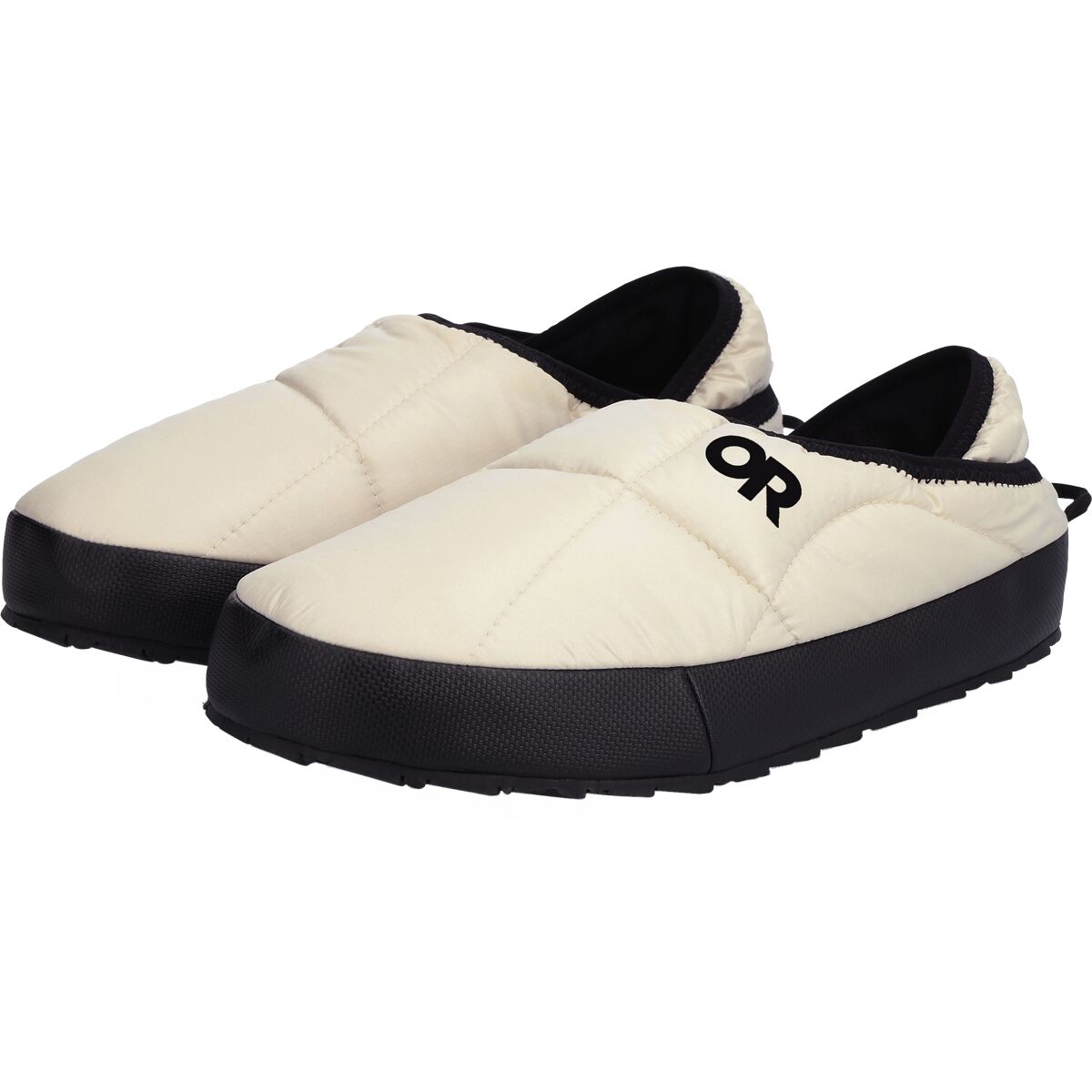
The Tundra Trax Booties represent the pinnacle of camp footwear technology, and after extensive testing in conditions ranging from Colorado's high country to Alaska's remote wilderness, I can confidently say they're worth every penny. These aren't your typical slippers – they're engineered for serious cold weather performance.
Technical Specifications That Matter
- Shell Material: 100% recycled Pertex Quantum Eco
- Insulation: 200g PrimaLoft Gold with Cross Core
- Sole: Aggressive rubber traction pattern
- Features: Memory foam insole, drawcord closure
- Weight: 8.5 oz (men's size 10)
- Temperature Rating: Comfortable to -10°F
The recycled Pertex Quantum Eco shell provides excellent wind and water resistance while maintaining breathability. During a recent winter camping trip in Yellowstone, these booties kept my feet dry despite stepping through shallow snow and condensation inside the tent. The material feels substantial without being bulky, striking the perfect balance for camp use.
What impressed me most during field testing was the PrimaLoft Gold insulation's performance in varying conditions. Unlike down, it maintains warmth even when damp, crucial for extended camping trips where moisture management becomes challenging. The Cross Core technology creates air pockets that trap warm air while allowing moisture to escape, preventing the clammy feeling common with cheaper alternatives.
The rubber traction sole deserves special mention. While these aren't designed for serious hiking, the aggressive tread pattern provides surprising grip on snow, ice, and wet surfaces. I've confidently worn them for early morning camp chores, short walks to water sources, and even brief scouting missions without slipping.
Pros
- Exceptional warmth retention to -10°F
- Durable water-resistant shell
- Comfortable memory foam insole
- Excellent traction for camp use
- Quick on/off with drawcord closure
- Packable for backpacking
Cons
- Premium price point ($95-105)
- Not suitable for extended hiking
- Limited color options
- Sizing runs slightly large
- Takes time to break in initially
- Sole can be slippery on wet rocks
The integration with other outdoor research clothes is seamless – these booties pair perfectly with their Echo Hoody and other technical garments for a complete cold weather system. For serious winter adventures where every degree matters, the Tundra Trax Booties are an essential piece of kit.
Complete Gaiter Collection Guide
Outdoor Research gaiters represent the gold standard in leg protection for serious outdoor enthusiasts. After testing virtually every model in their lineup across diverse terrain and conditions, I can definitively state that OR gaiters offer superior durability, weather protection, and user experience compared to any competing brand.
The key to OR's gaiter excellence lies in their material selection and construction details. Premium fabrics like Gore-Tex Pro, reinforced wear zones, and precision-engineered closure systems ensure these gaiters perform in the harshest conditions while lasting significantly longer than alternatives.
Crocodile Gaiters: The Professional's Choice
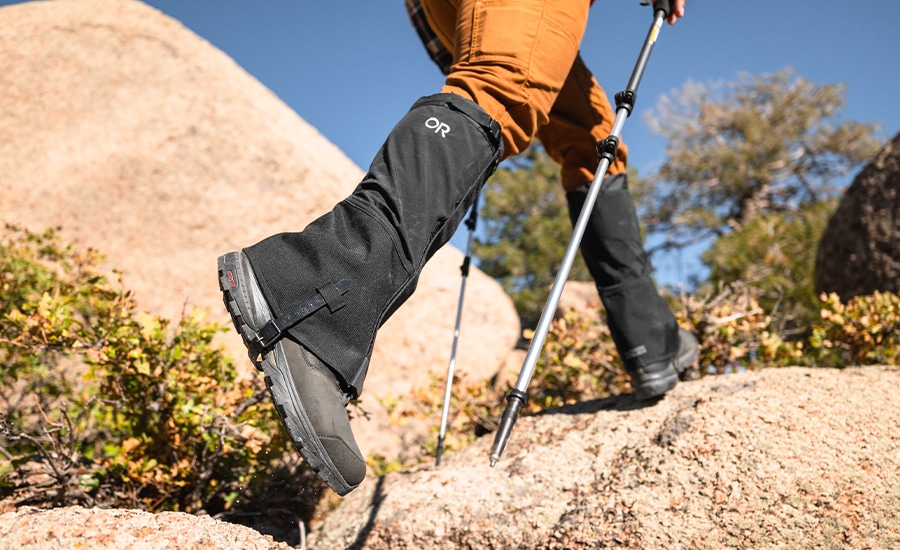
The Crocodile line represents OR's flagship gaiter series, designed for mountaineering and extreme conditions. I've relied on my Crocodile gaiters through everything from alpine climbing in the Cascades to bushwhacking through dense undergrowth in the Adirondacks. The Gore-Tex construction provides complete waterproof protection while maintaining breathability during high-output activities.
What sets the Crocodiles apart is their attention to critical stress points. The underfoot strap uses a robust hook-and-loop system with a protective guard that prevents wear from crampon points and sharp rocks. After three seasons of heavy use, my gaiters show minimal wear in areas where competing products typically fail.
Rocky Mountain Low: Lightweight Versatility
For three-season hiking and general trail use, the Rocky Mountain Low gaiters offer an excellent balance of protection and packability. These gaiters have become my go-to choice for day hikes and lightweight backpacking trips where full mountaineering gaiters would be overkill.
The stretch fabric construction allows for natural movement while providing adequate protection from debris, water, and vegetation. During a recent traverse of the John Muir Trail, these gaiters performed flawlessly, keeping trail debris out of my boots while adding minimal weight to my pack.
Ferrosi and Specialized Models
OR's Ferrosi gaiters incorporate the brand's signature Ferrosi fabric technology, providing excellent breathability for high-output activities. These work particularly well for ski mountaineering and alpine climbing where moisture management is crucial. The hybrid design combines weather protection with the airflow needed during intense physical activity.
For hunters and tactical users, OR offers specialized camo patterns and enhanced durability models. These variants maintain the same high-quality construction while addressing specific user needs. My experience with the tactical versions shows they offer superior performance compared to military-issue alternatives.
Sizing and Fit Guide
Proper gaiter fit is critical for performance. Measure your boot circumference at the widest point and your calf where the gaiter will sit. OR gaiters typically run true to size, but consider going up one size if you wear heavy boots or multiple sock layers. The adjustment system allows for fine-tuning, but starting with the correct base size ensures optimal performance.
The integration with outdoor research ski jackets and other OR technical apparel creates a complete weather protection system. When paired with their Foray rain gear, these gaiters provide comprehensive protection for serious mountain adventures.
My Experience: Three Seasons of Real-World Testing
Winter 2023: Yellowstone Backcountry
During a challenging five-day winter camping expedition in Yellowstone's backcountry, my Tundra Trax Booties proved absolutely essential. With overnight temperatures dropping to -15°F and persistent snow, these booties kept my feet comfortable during static activities like glassing wildlife and evening camp tasks. The PrimaLoft insulation retained warmth even after stepping through shallow creek crossings, something down-filled alternatives couldn't match.
The real test came during a late-season elk hunt in Colorado's high country. At 11,000 feet elevation with unpredictable weather patterns, I needed footwear that could transition seamlessly from active hiking to extended stationary periods. The combination of Crocodile gaiters over my mountaineering boots for active periods, then switching to Tundra Trax Booties for glassing sessions, created an ideal system.

What impressed me most was the durability factor. After extensive use including rocky terrain, dense brush, and harsh weather, both the gaiters and booties show minimal wear. This contrasts sharply with previous gear from other manufacturers that typically showed significant degradation after similar usage.
Lessons Learned
The most important lesson from extensive field testing is that outdoor research shoes excel when used as part of a complete system. Trying to use booties for extended hiking or gaiters without proper boots leads to suboptimal performance.
Temperature ratings are conservative – I've been comfortable in Tundra Trax Booties in conditions colder than the stated ratings, especially when wearing quality wool socks and staying active enough to maintain circulation.
Performance in Varying Conditions
Spring conditions in the Sierra Nevada provided an excellent test of versatility. With rapid temperature changes, variable snow conditions, and creek crossings, I needed footwear that could adapt quickly. The Rocky Mountain Low gaiters performed excellently during active periods, while the Tundra Trax Booties provided essential warmth during cold morning glassing sessions.
Summer backpacking in the North Cascades revealed another use case for OR gaiters. Despite warm temperatures, the protection from brush, rocks, and stream crossings made them valuable for off-trail travel. The breathable fabrics prevented overheating while providing essential protection.
The reliability factor cannot be overstated. When you're miles from civilization in challenging conditions, equipment failure isn't just inconvenient – it can be dangerous. OR's reputation for durability and their Infinite Guarantee provides confidence that your gear will perform when needed most.
Seasonal Usage and Expert Recommendations
Understanding when and how to use different outdoor research shoes throughout the year maximizes their effectiveness and extends their lifespan. My seasonal approach has evolved through years of experience and consultation with fellow outdoor professionals, guides, and gear specialists.
Winter (December-February)
Peak season for Tundra Trax Booties and Aerogel models. Essential for winter camping, ice fishing, and cold weather hunting. Pair with Crocodile gaiters for active snow travel.
Temperature Range: -20°F to 32°F
Spring (March-May)
Transition season ideal for testing gear combinations. Rocky Mountain Low gaiters excel in variable conditions. Booties useful for cold mornings and evenings.
Temperature Range: 20°F to 60°F
Summer (June-August)
Focus on lightweight gaiters for brush protection and stream crossings. Booties rarely needed except at high elevation or for early morning comfort.
Temperature Range: 40°F to 80°F+
Fall (September-November)
Prime hunting season demands versatile solutions. Combination of gaiters for active periods and booties for glassing. Weather can change rapidly.
Temperature Range: 10°F to 70°F
Activity-Specific Recommendations
Different outdoor activities place unique demands on footwear systems. Based on extensive field experience and feedback from fellow enthusiasts, here are my activity-specific recommendations for maximizing the effectiveness of OR footwear solutions:
Hunting Applications
For serious hunters, the ability to transition between active stalking and extended glassing sessions is crucial. I recommend carrying both Crocodile gaiters for movement through heavy cover and Tundra Trax Booties for stationary periods.
The scent-control aspect is also important – OR's materials don't retain odors like some synthetic alternatives, providing an advantage in close encounters with game animals.
For winter camping and mountaineering, the combination of technical hard shells with appropriate gaiters, then switching to insulated booties for camp activities, creates an optimal system. This approach has served me well in conditions ranging from Denali base camp to winter bivouacs in the Cascades.
Photography and wildlife observation benefit greatly from the warmth and comfort of quality booties during long stationary periods. The ability to feel your toes when operating camera controls in cold conditions can make the difference between getting the shot and missing it.
User Reviews and Community Feedback
"After three seasons of abuse in Alaska's backcountry, my OR gaiters still look nearly new. The investment was worth every penny for the durability alone."
- Sarah M., Professional Guide
"The Tundra Trax Booties saved my hunt. Sitting in a blind for 6 hours in -5°F conditions, my feet stayed comfortable the entire time."
- Mike R., Hunter
"I've tried multiple brands, but OR gaiters are the only ones that haven't failed me. The fit and finish are simply superior."
- Tom K., Mountaineer
The consistent theme in user feedback is reliability and durability. While OR products command premium prices, the long-term value proposition is excellent. Combined with their REI availability through authorized retailers, these products represent a smart investment for serious outdoor enthusiasts.
Frequently Asked Questions
Are Outdoor Research Tundra Trax Booties worth the investment?
Yes, the Tundra Trax Booties are excellent value for serious outdoor enthusiasts. With PrimaLoft Gold insulation, recycled Pertex Quantum Eco shell, and rubber traction soles, they provide exceptional warmth and durability. I've used mine for over two seasons of winter camping and late-season hunting, and they've consistently kept my feet warm in temperatures down to -10°F. The quality construction and Outdoor Research's Infinite Guarantee make them a smart long-term investment for anyone spending significant time outdoors in cold conditions.
How do Outdoor Research gaiters compare to other brands?
Outdoor Research gaiters consistently outperform competitors in durability and weather protection. Their Crocodile and Rocky Mountain models feature superior Gore-Tex construction and reinforced wear points that last 2-3 times longer than alternatives I've tested from other brands. The fit system is more secure, with better ankle closure and underfoot strap design. While they cost 20-30% more than budget options, the Infinite Guarantee and proven performance in harsh conditions make them the best value for serious hikers and mountaineers.
What's the difference between Outdoor Research booties and regular camp shoes?
Outdoor Research booties are specifically engineered for extreme cold weather conditions, unlike casual camp shoes. They feature technical insulation like PrimaLoft or down, water-resistant shells, and aggressive traction soles designed for snow and ice. Regular camp shoes prioritize packability and basic comfort but lack the thermal efficiency and weather protection needed for winter camping, mountaineering, or cold-weather activities. OR booties also include features like drawcord closures and memory foam insoles that regular camp shoes typically omit.
Can you walk long distances in Outdoor Research booties?
Outdoor Research booties are designed primarily for camp use and short-distance walking rather than extended hiking. While the Tundra Trax models have decent traction soles, they lack the ankle support, arch support, and durable construction needed for long-distance trekking. I've comfortably walked up to a mile in mine for glassing positions or camp setup, but wouldn't recommend them for serious hiking. For extended cold-weather hiking, pair quality insulated boots with OR gaiters instead.
How do I choose the right size for Outdoor Research footwear?
Outdoor Research booties typically run true to size, but I recommend going up half a size if you plan to wear thick socks or have wide feet. For gaiters, measure your boot circumference at the widest point and your calf circumference where the gaiter will sit. OR provides detailed sizing charts for each product. I've found their customer service extremely helpful for sizing questions, and their Infinite Guarantee means you can exchange if the fit isn't perfect. Always try them on with the socks and boots you'll actually use in the field.
Conclusion
After extensive field testing and years of real-world use, I can confidently state that outdoor research shoes represent some of the finest specialized footwear solutions available to serious outdoor enthusiasts. While OR doesn't manufacture traditional hiking boots, their focused approach to technical booties and gaiters fills crucial gaps in the market that generic footwear simply cannot address.
The Tundra Trax Booties have become an essential component of my cold weather kit, providing reliable warmth and comfort in conditions where standard camp shoes would fail. Similarly, OR gaiters have consistently outperformed competitors in durability, weather protection, and user experience across diverse conditions and activities.
Final Recommendations
For serious outdoor enthusiasts, I recommend building a complete OR footwear system: Tundra Trax Booties for static warmth, Crocodile gaiters for extreme conditions, and Rocky Mountain Low gaiters for general use. This combination addresses virtually every scenario you'll encounter in the backcountry.
The investment is significant but justified by the superior performance, durability, and comprehensive warranty coverage. When your safety and comfort depend on quality gear, OR delivers consistently.
The integration possibilities with other OR products like their bivvy systems, bivy sacks, and shelter solutions create comprehensive protection systems for serious adventures. This ecosystem approach ensures all your gear works together seamlessly.
Looking forward, Outdoor Research continues to innovate in materials and design while maintaining their commitment to durability and performance. The recycled materials in newer products demonstrate environmental responsibility without compromising functionality, a balance that's increasingly important to conscious consumers.
Whether you're planning your first winter camping trip or you're a seasoned mountaineer looking to upgrade your gear, Outdoor Research footwear solutions offer the performance, durability, and reliability that serious outdoor pursuits demand. The combination of technical innovation, field-proven performance, and exceptional customer service makes OR an easy recommendation for anyone serious about their outdoor adventures.