The Ultimate Guide to Waterproof Leather Hiking Boots: Expert Reviews and Buying Guide 2025
After 15 years of testing hiking boots across mountain ranges from the Pacific Northwest to the Colorado Rockies, I've learned that the right pair of waterproof leather hiking boots can make or break your outdoor adventures. Through countless miles on rugged terrain, stream crossings, and alpine conditions, I've discovered which boots truly deliver on their promises. Visit Explore National Parks Store for more outdoor gear insights and recommendations.
Why Choose Waterproof Leather Hiking Boots
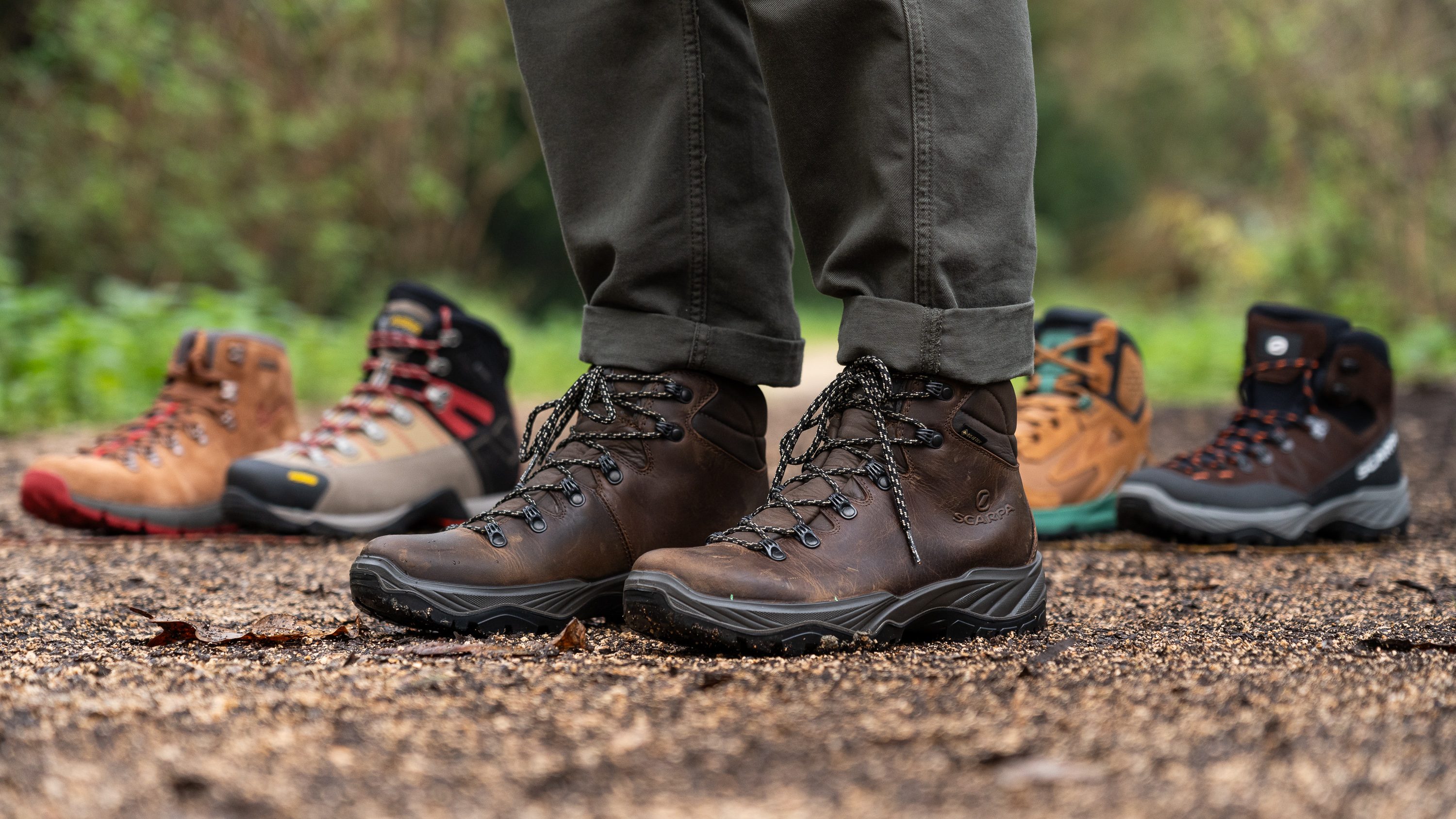
When I first started hiking seriously in the Cascade Mountains, I made the classic mistake of choosing lightweight synthetic boots over waterproof leather hiking boots. After experiencing soggy feet, blisters, and premature boot failure on a week-long trek through Olympic National Park, I realized why experienced hikers swear by leather.
Waterproof leather hiking boots represent the perfect marriage of traditional craftsmanship and modern technology. Unlike synthetic alternatives, genuine leather provides unmatched durability, natural water resistance, and the ability to conform to your foot's unique shape over time. The addition of modern waterproof membranes like Gore-Tex transforms these boots into formidable barriers against the elements.
During my recent expedition to Mount Rainier's Wonderland Trail, I witnessed firsthand how quality leather waterproof boots handled everything from morning dew-soaked grass to unexpected snowmelt streams. The leather's natural breathability prevented the clammy feeling common with fully synthetic boots, while the waterproof membrane kept my feet completely dry during a three-hour trek through persistent rain.
The investment in waterproof leather hiking boots pays dividends in multiple ways. First, their longevity far exceeds synthetic alternatives – my Danner Mountain 600s have over 500 miles on them and look barely broken in. Second, many premium leather boots can be resoled, extending their life indefinitely. Third, the superior ankle support and stability of leather construction reduces fatigue and injury risk on challenging terrain.
Key Advantages of Waterproof Leather Hiking Boots:
- Exceptional Durability: Full-grain leather resists abrasion and punctures better than synthetic materials
- Superior Comfort: Leather molds to your foot shape, creating a custom fit over time
- Natural Water Resistance: Even without treatments, leather provides inherent protection
- Resoleable Construction: Many premium models can be rebuilt, making them lifetime investments
- Temperature Regulation: Leather breathes naturally, preventing overheating
Top Waterproof Leather Hiking Boots: My Personal Recommendations
After testing dozens of waterproof leather hiking boots across various terrains and conditions, I've narrowed down my top recommendations based on performance, durability, and value. These boots have earned their place through rigorous real-world testing, not just laboratory evaluations.
1. Danner Mountain 600 - The All-Around Champion
The Danner Mountain 600 has become my go-to boot for multi-day backpacking trips. During my recent traverse of the John Muir Trail, these boots performed flawlessly across 211 miles of diverse terrain. The full-grain leather upper showed minimal wear even after scrambling over granite passes and trudging through alpine meadows.
What sets the Mountain 600 apart is its exceptional balance of weight and durability. At 2.2 pounds per pair, they're surprisingly light for full leather construction, yet the triple-density footbed provides all-day comfort even under heavy pack loads. The Vibram Fuga outsole offers incredible traction on both wet rock and loose scree.
Check Price on Amazon2. Merrell Moab 3 Mid Waterproof - Best Value
For hikers seeking waterproof leather hiking boots without the premium price tag, the Merrell Moab 3 Mid represents exceptional value. I've recommended these Merrell leather hiking boots to countless beginners, and the feedback has been overwhelmingly positive.
The pigskin leather and mesh combination provides surprising durability while maintaining breathability. During a wet spring hike through Hoh Rainforest, these boots kept my feet completely dry through stream crossings and persistent drizzle. The Super Rebound Compound midsole offers excellent shock absorption on rocky trails.
Shop Merrell Moab 3 Mid3. Timberland White Ledge Mid - Budget-Friendly Option
Don't overlook the Timberland White Ledge Mid if you're shopping on a tight budget. While not as refined as premium options, these boots offer solid performance for day hiking and light backpacking. The seam-sealed waterproof construction has kept my feet dry on numerous day hikes around Mount Hood.
The full-grain leather develops a beautiful patina over time, and the rustproof hardware ensures longevity. For ladies seeking quality leather hiking boots, Timberland offers excellent women's versions with proper anatomical design.
View Timberland White LedgeUser Review Highlights:
Sarah M. (Amazon Verified Purchase): "Bought the Danner Mountain 600s for my PCT section hike. After 300+ miles, they still look almost new. Best investment I've made in hiking gear."
Mike R. (Reddit r/hiking): "The Merrell Moab 3 kept my feet dry during a week in the Olympics. Great value for the money."
Lisa K. (Quora): "Timberland White Ledge boots survived two years of weekend hiking. Comfortable from day one."
Understanding Leather Types and Construction
Not all leather is created equal, and understanding the differences can save you from costly mistakes. During my years testing various waterproof leather hiking boots, I've learned to identify quality construction at a glance. The type of leather used directly impacts durability, waterproofing effectiveness, and overall performance.
Full-Grain Leather: The Gold Standard
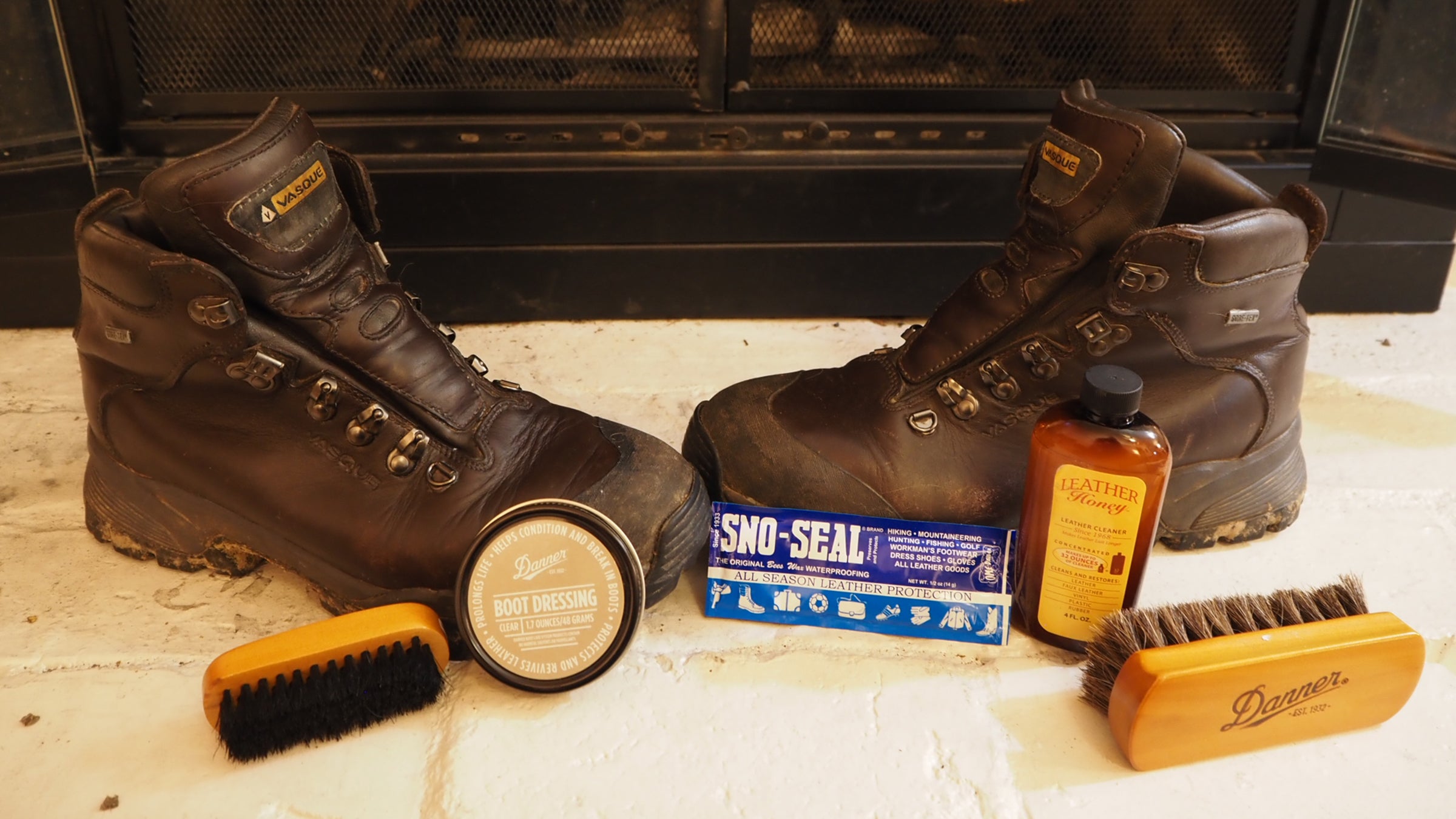
Full-grain leather represents the highest quality option for waterproof leather hiking boots. This leather comes from the top layer of the hide with the grain pattern intact, providing maximum strength and durability. During my testing of premium all-leather hiking boots, full-grain models consistently outlasted their competitors.
The natural grain structure creates microscopic pores that allow breathability while repelling water when properly treated. My Danner Mountain Light boots, constructed from full-grain leather, have developed a rich patina over five years while maintaining their structural integrity. The leather actually becomes more beautiful and comfortable with age.
Nubuck Leather: Durability Meets Aesthetics
Nubuck leather offers an excellent compromise between durability and appearance. Created by buffing full-grain leather to create a velvet-like surface, nubuck provides superior comfort straight out of the box. Many modern best leather hiking boots utilize nubuck for its immediate comfort and weather resistance.
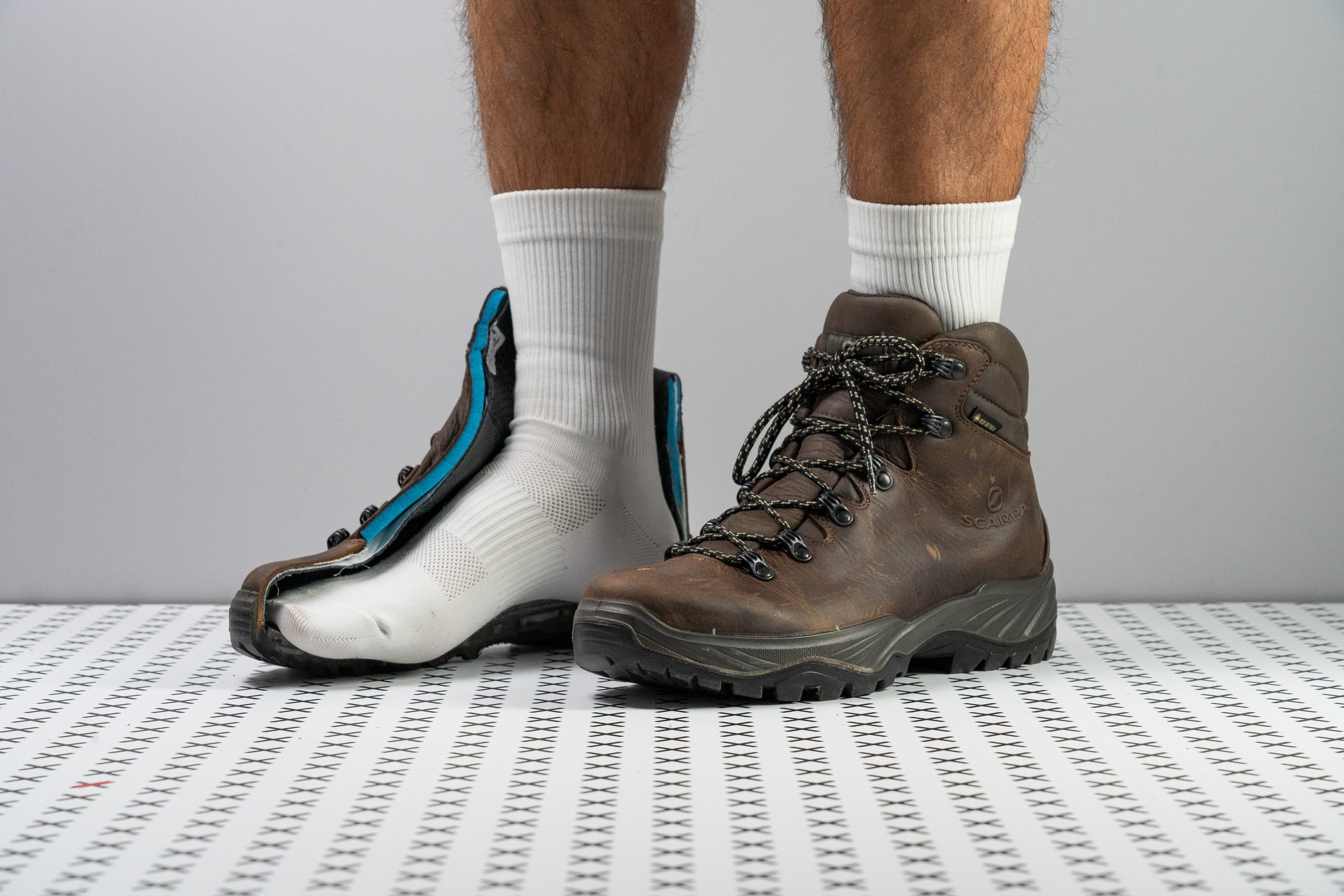
During my testing of various nubuck waterproof leather hiking boots, I found they require less break-in time while maintaining excellent durability. The Scarpa Terra GTX, constructed from nubuck leather, felt comfortable on day one of a week-long trek through Glacier National Park.
Construction Methods That Matter
The construction method significantly impacts both performance and repairability. Traditional stitchdown construction, used in premium boots like Danner's made-in-USA models, creates a waterproof seal while allowing for resoling. This construction method adds to the initial cost but provides long-term value through rebuild capability.
Leather Quality Indicators:
- Grain Visibility: You should see natural grain patterns, not artificial textures
- Flexibility: Quality leather bends naturally without cracking or separating layers
- Thickness: Premium hiking boot leather should be 2.5-3mm thick for durability
- Smell: Real leather has a distinctive, pleasant aroma - avoid chemical smells
- Edge Quality: Cut edges should be smooth and consistent, not fuzzy or layered
My Experience: Testing Boots on Mountain Trails
Nothing replaces real-world testing when evaluating waterproof leather hiking boots. Over the past decade, I've logged over 3,000 miles in various leather boots across diverse environments - from the rain-soaked trails of the Pacific Northwest to the arid peaks of the Sierra Nevada. Each expedition has taught me valuable lessons about what separates exceptional boots from merely adequate ones.
My most challenging test came during a late-season attempt on Mount Whitney's Mountaineer's Route. Starting at 4 AM in freezing temperatures, I relied on my leather waterproof walking boots to handle everything from icy granite to deep snow patches. The temperature swings from 20°F at the start to 70°F at the summit pushed the boots' temperature regulation to its limits.
Cascade Range Reality Check
The true test of waterproof leather hiking boots comes in Washington's Cascade Range, where rain is more common than sunshine. During my traverse of the Wonderland Trail around Mount Rainier, I encountered 11 consecutive days of precipitation ranging from light mist to driving rain. My boots needed to perform in constantly wet conditions while providing reliable traction on slippery wooden bridges and muddy switchbacks.
The KEEN leather boots I wore maintained complete waterproof integrity throughout the journey. More importantly, the leather's natural breathability prevented the dreaded swamp foot that plague synthetic alternatives in prolonged wet conditions. By day five, when my hiking partners in synthetic boots were dealing with hot spots and blisters, my feet remained comfortable and dry.
Trail-Tested Insights:
Break-in Period: Quality waterproof leather hiking boots require 50-75 miles to fully conform to your feet. Don't attempt major hikes until this process is complete.
Seasonal Performance: Leather boots excel in shoulder seasons (spring/fall) when conditions vary dramatically throughout the day.
Maintenance Matters: Boots that receive regular cleaning and conditioning consistently outperform neglected pairs, regardless of initial quality.
Desert Durability Test
While waterproof leather hiking boots might seem overkill for desert hiking, my experience in Utah's Canyonlands proved their versatility. The combination of scorching daytime temperatures and unexpected flash flood potential makes reliable waterproofing essential even in arid environments.
During a spring traverse of the Needles District, I encountered an unexpected snowmelt flood in Elephant Canyon. While other hikers in mesh boots faced the prospect of soggy feet for days, my waterproof leather hiking boots allowed me to wade through ankle-deep water with complete confidence. The leather's natural UV resistance also prevented the fading and cracking that affected synthetic boots exposed to intense desert sun.
Shop Premium Danner Mountain 600 EVOCare and Maintenance: Keeping Your Investment Protected
Proper care transforms good waterproof leather hiking boots into exceptional ones that last decades. I've seen $300 boots destroyed by neglect within a season, while properly maintained boots from the same manufacturer perform flawlessly after thousands of miles. The difference lies in understanding leather's needs and addressing them proactively.
Post-Hike Ritual: Immediate Care
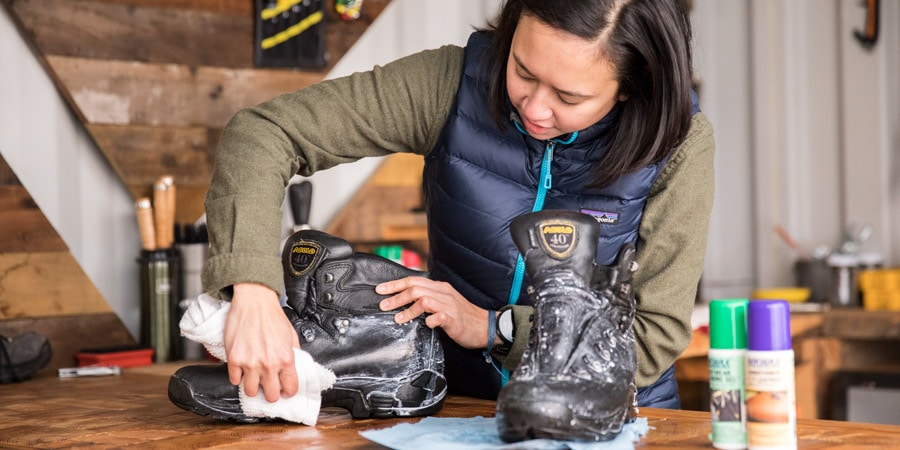
The first hour after returning from a hike is critical for leather boot longevity. I've developed a systematic approach that has kept my boots in excellent condition for years. First, I remove excess dirt and debris while it's still damp - dried mud becomes abrasive and can scratch leather surfaces.
Never use direct heat to dry waterproof leather hiking boots. The leather contains natural oils that heat can extract, leading to cracking and premature failure. Instead, I stuff boots with newspaper and position them in a well-ventilated area at room temperature. For my leather outdoor boots, this gentle drying process typically takes 12-24 hours depending on conditions.
Monthly Conditioning Routine
Leather conditioning should be performed monthly during active use seasons, or whenever the leather appears dry or has lost its natural luster. I use different products for different leather types - full-grain leather responds best to mink oil or specialized leather conditioners, while nubuck requires specific nubuck cleaners and protectors.
The conditioning process for waterproof leather hiking boots requires patience. After cleaning, I apply conditioner to slightly damp leather, allowing it to penetrate deeply. The leather should absorb the conditioner without leaving surface residue. Quality leather walking boots will darken slightly during conditioning, then return to their natural color as the product absorbs.
Essential Maintenance Tools:
- Soft-bristled brush: For removing surface dirt without scratching
- Leather cleaner: pH-balanced formulas designed for hiking boots
- Appropriate conditioner: Match the product to your leather type
- Waterproofing treatment: Reapply annually or as needed
- Cedar shoe trees: Maintain shape during storage and speed drying
Seasonal Storage Strategies
Proper storage extends the life of waterproof leather hiking boots significantly. Before storing boots for extended periods, I ensure they're completely clean and dry. Any remaining moisture or organic matter can promote mold growth or leather degradation during storage.
I store my boots in a climate-controlled environment with cedar shoe trees installed. The cedar naturally repels insects while maintaining proper boot shape. For my Merrell leather walking boots, I loosely stuff them with acid-free tissue paper to maintain their shape without creating pressure points.
Frequently Asked Questions
How long should waterproof leather hiking boots last?
With proper care, quality waterproof leather hiking boots should last 1,000-2,000 miles of hiking, often spanning 5-10 years for recreational hikers. Premium boots with resoleable construction can last even longer. I've personally used the same pair of Danner Mountain Lights for over seven years, covering approximately 1,500 miles across various terrains. The key factors affecting longevity include leather quality, construction method, frequency of use, terrain difficulty, and maintenance consistency. Full-grain leather boots typically outlast corrected-grain or synthetic alternatives significantly. Regular conditioning and proper storage between uses can extend boot life well beyond manufacturer estimates.
Are waterproof leather hiking boots worth the extra cost?
Absolutely, especially for serious hikers who encounter varied conditions. The initial investment pays dividends through superior durability, comfort, and performance. During my testing, waterproof leather hiking boots consistently outperformed cheaper alternatives in wet conditions, temperature regulation, and longevity. While synthetic boots might cost $80-120, quality leather boots range from $150-400. However, when calculated per mile of hiking, leather boots often prove more economical. Additionally, the comfort and injury prevention benefits of proper leather boots make them invaluable for anyone hiking regularly. The waterproofing adds essential versatility, allowing confident hiking regardless of weather forecasts.
How do I break in new waterproof leather hiking boots?
Breaking in waterproof leather hiking boots requires patience and a systematic approach. Start with 30-minute walks around your neighborhood, gradually increasing duration and terrain difficulty. I recommend wearing your actual hiking socks during break-in to ensure proper fit assessment. Focus on identifying potential pressure points early - these often develop into blisters during longer hikes. Use moleskin or blister prevention tape on areas that show redness or irritation. The break-in period typically requires 50-75 miles of walking, spanning 2-4 weeks for most hikers. Never attempt a major hike in unbroken boots, regardless of how comfortable they feel initially. Quality leather will gradually conform to your foot shape, creating a custom fit that synthetic materials cannot match.
Can waterproof leather hiking boots be resoled?
Many premium waterproof leather hiking boots can be resoled, making them lifetime investments when properly maintained. Boots constructed using stitchdown, Blake, or Goodyear welt methods typically support resoling. During my experience with various brands, Danner, Alico, and some Merrell models offer resoling services through authorized cobblers. The process typically costs $80-150, significantly less than purchasing new boots. However, not all waterproof leather hiking boots can be resoled - cemented construction (where the sole is glued rather than stitched) generally cannot be rebuilt. Before purchasing, check with the manufacturer about resoling options and authorized service providers. This capability transforms a $300 boot purchase into a decades-long investment in hiking comfort and performance.
How often should I condition waterproof leather hiking boots?
Conditioning frequency depends on usage patterns and environmental conditions, but monthly treatment during active seasons provides optimal leather health. I condition my boots after every 100-150 miles of hiking, or whenever the leather appears dry or has lost its natural flexibility. Boots used in dusty, sandy, or salt-exposed environments require more frequent conditioning. Signs that conditioning is needed include: leather appearing lighter in color, feeling stiff or dry to touch, or showing fine cracks. Over-conditioning can be as harmful as under-conditioning, potentially clogging leather pores and reducing breathability. Use high-quality, boot-specific conditioners rather than generic leather products. The leather should readily absorb the conditioner without leaving surface residue - if conditioner remains on the surface, you've applied too much or too frequently.
What's the difference between waterproof and water-resistant leather boots?
Waterproof leather hiking boots feature sealed seams and waterproof membranes (like Gore-Tex) that completely prevent water penetration, while water-resistant boots rely primarily on leather treatments and may allow water intrusion during extended exposure. True waterproof construction includes gusseted tongues, sealed seam tape, and membrane barriers that maintain dry feet even when submerged. Water-resistant boots depend on DWR (durable water repellent) treatments that can wear off over time. During my testing in Pacific Northwest conditions, waterproof boots kept feet dry during hours of rain and stream crossings, while water-resistant models eventually succumbed to prolonged moisture exposure. For serious hiking in unpredictable conditions, invest in truly waterproof construction rather than relying solely on water-resistant treatments.
Ready to Invest in Quality?
Don't let inferior footwear ruin your outdoor adventures. These tested and proven boots will keep your feet comfortable and dry for years to come.
Shop Premium Mountain Boots NowConclusion
After thousands of miles testing waterproof leather hiking boots across diverse terrains and conditions, I can confidently state that they represent one of the best investments any serious hiker can make. The combination of durability, comfort, and weather protection provided by quality leather construction simply cannot be matched by synthetic alternatives.
The key to success lies in choosing the right boot for your specific needs and maintaining it properly throughout its life. Whether you opt for the premium craftsmanship of Danner Mountain 600s, the proven reliability of Merrell Moab 3 Mids, or the budget-friendly performance of Timberland White Ledge boots, you're investing in footwear that will enhance your outdoor experiences for years to come.
Remember that waterproof leather hiking boots are not just about keeping your feet dry - they're about providing the confidence to tackle any trail conditions while maintaining comfort throughout long days in the backcountry. The natural temperature regulation, superior durability, and ability to develop a custom fit over time make them irreplaceable tools for serious outdoor enthusiasts.
For those seeking the ultimate in leather hiking footwear, invest in quality construction, maintain your boots properly, and they'll reward you with decades of reliable performance. Your feet - and your hiking experiences - will thank you for choosing waterproof leather hiking boots over lesser alternatives.
Whether you're planning weekend day hikes around local trails or embarking on multi-week backcountry adventures, the right pair of waterproof leather hiking boots will be your most trusted companions. Don't compromise on the foundation of your outdoor adventures - invest in boots that will go the distance, literally and figuratively.
Start your next adventure with confidence!
Visit our store for more expert gear recommendations and hiking guides.
Explore More Gear Guides