Ultimate Emergency Fire Starter Kit Guide: Essential Tools for Survival & Camping 2025
After decades of wilderness adventures across national parks and countless nights spent around campfires, I've learned that a reliable emergency fire starter kit isn't just gear—it's a lifeline. Whether you're planning a weekend camping trip or preparing for unexpected survival scenarios, the right fire starting tools can mean the difference between comfort and crisis. Visit our homepage for more essential outdoor gear guides.
What Makes an Emergency Fire Starter Kit Essential

During my first solo backpacking trip in Yellowstone fifteen years ago, I learned the hard way why every outdoor enthusiast needs a proper emergency fire starter kit. A sudden thunderstorm soaked my gear, temperatures plummeted, and my single lighter refused to work. That night taught me that fire isn't just about comfort—it's about survival, warmth, food preparation, water purification, and signaling for help.
An emergency fire starter kit serves as your insurance policy against the unexpected. Unlike casual camping where you might rely on dry wood and favorable conditions, emergency scenarios demand tools that perform under stress. Weather doesn't wait for convenient timing, and neither do equipment failures or getting lost. I've since used my fire starting skills in everything from planned camping trips to unexpected overnight situations when trail conditions changed rapidly.
The psychology of fire in emergency situations cannot be overstated. Beyond the practical benefits of warmth and cooking capability, a successful fire provides tremendous morale boost and sense of control when everything else feels uncertain. It signals safety, creates a focal point for decision-making, and can literally be a beacon of hope. Quality fire starting equipment removes the guesswork and stress from this critical survival need.
Modern emergency fire starter kits have evolved significantly from the basic matches and newspaper our grandparents might have used. Today's kits incorporate weather-resistant materials, multiple ignition methods, and compact designs that fit seamlessly into any outdoor gear setup. Whether you're heading out for a day hike near Manitou Incline or planning extended backcountry adventures, having redundant fire starting capabilities ensures you're prepared for whatever nature throws your way.
Types of Fire Starting Methods and Tools
Ferro Rod Fire Starters
Ferrocerium rods represent the gold standard for emergency fire starting. These magnesium-based alloy rods produce intense sparks reaching temperatures of 3000°F when struck with steel. I've tested dozens of ferro rods across various weather conditions, and they consistently outperform other ignition methods in reliability. They work when wet, function at extreme altitudes, and a single rod can generate thousands of sparks over years of use.
Waterproof Matches and Storm Matches
Waterproof matches offer instant flame capability that many beginners find more intuitive than ferro rods. Storm matches, in particular, are designed to stay lit in wind and rain conditions that would extinguish regular flames. During my testing in Pacific Northwest conditions, storm matches proved invaluable for quickly establishing initial flame even when everything else was soaked. They're excellent backup options and primary choices for those less experienced with spark-based ignition methods.
Magnesium Fire Starters
Magnesium blocks combined with ferro rod strikers provide both spark generation and highly flammable tinder in one tool. The magnesium shavings burn extremely hot and fast, making them excellent for igniting damp materials. However, they require practice to master the technique of scraping sufficient magnesium and creating sparks simultaneously. I recommend these for experienced outdoor enthusiasts who want compact, lightweight fire starting capability.
Each method has specific advantages: ferro rods for long-term reliability, waterproof matches for ease of use, and magnesium starters for extreme conditions. The best emergency fire starter kit incorporates multiple methods, ensuring you have backup options when primary methods fail or conditions become challenging.
Top Emergency Fire Starter Kit Components
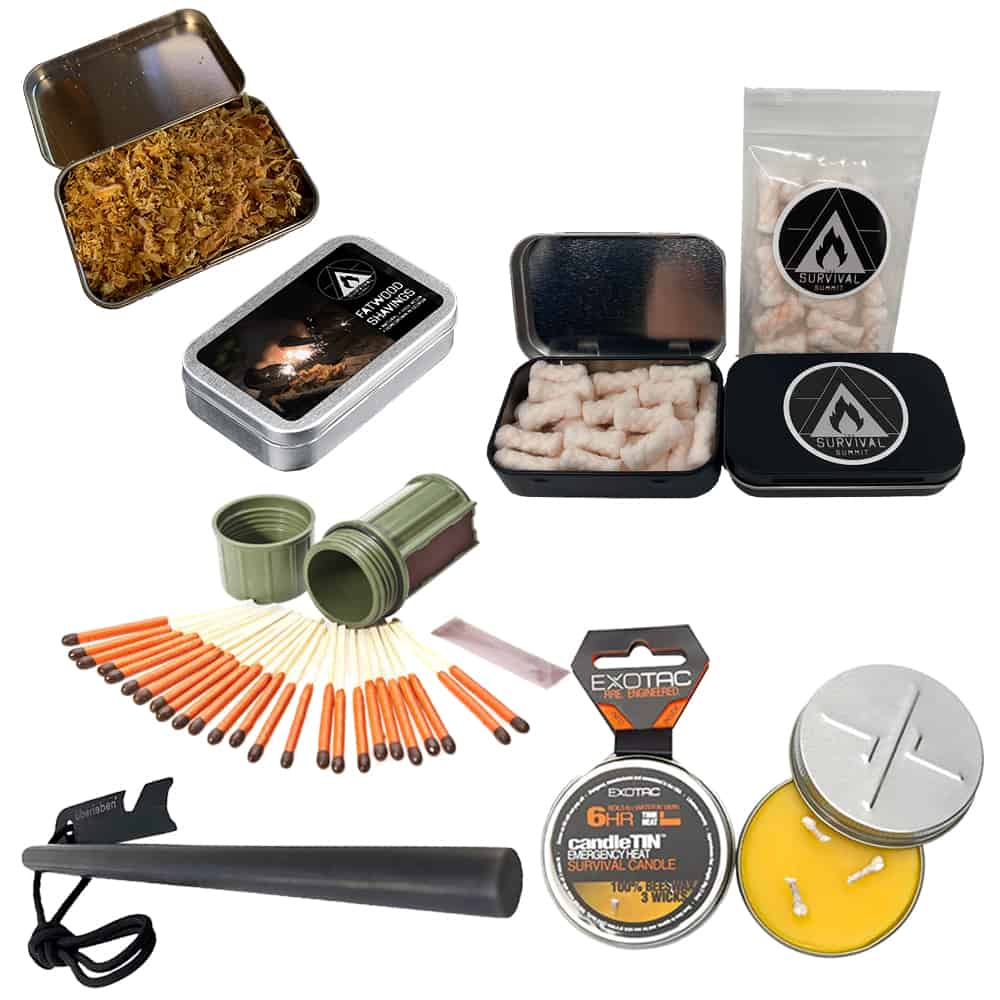
Essential Ignition Sources
Your emergency fire starter kit must include redundant ignition sources. I always pack a primary ferro rod (4-6 inches for optimal spark production), waterproof matches in a sealed container, and a reliable windproof lighter as backup. This triple redundancy approach has saved me in situations where altitude affected lighter performance, wet conditions compromised matches, or fatigue made ferro rod technique challenging.
Tinder Materials
Tinder catches sparks and burns rapidly to establish initial flame. My preferred tinder combination includes petroleum jelly-soaked cotton balls (burn for 3-4 minutes even when wet), birch bark strips (natural and excellent for catching sparks), and commercial fire starting cubes for reliable ignition. I also carry dry lint from cotton clothing, which works exceptionally well with ferro rod sparks. Having variety ensures success regardless of available natural materials.
Kindling Preparation Tools
Once your tinder ignites, you need progressively larger materials to build sustainable fire. A quality knife is essential for creating kindling from available wood. I recommend carrying a small hatchet or folding saw for processing larger fuel. During wet conditions, you'll need tools to access dry wood inside branches and logs. These tools extend beyond fire starting into general outdoor preparedness, making them valuable multi-purpose kit components.
Proper storage keeps all components dry and organized. I use waterproof containers with compartments for different materials. Everything should be easily accessible during stressful situations when fine motor skills may be compromised. Consider how you'll access and use each component while wearing gloves or in low-light conditions.
My Experience: Field Testing Fire Starter Kits
Real-World Testing Scenarios
Over the past decade, I've deliberately tested emergency fire starter kits in challenging conditions to understand their real-world performance. From 14-degree nights in the Colorado Rockies to Pacific Northwest downpours, these experiences taught me which gear performs and which fails when it matters most.
One particularly memorable test occurred during a late-season camping trip when an unexpected snowstorm hit our campsite. Temperatures dropped to 8°F, and everything became covered in wet snow. My standard ferro rod technique, which works perfectly in dry conditions, initially failed because my usual tinder was too damp. This experience taught me the critical importance of having truly waterproof tinder options and understanding how cold affects your manual dexterity and fire building technique.
During summer hiking season, I regularly practice fire starting during different weather conditions. Windy conditions taught me that spark direction matters enormously—you need tinder placement that protects initial flame development. Wet conditions showed me that petroleum jelly-soaked cotton balls are worth their weight in gold, burning intensely even when surface moisture is present. High altitude experiences revealed that lighters become unreliable above 8,000 feet, making ferro rods essential for mountain adventures.
The most valuable lesson from field testing is that muscle memory and confidence matter as much as equipment quality. During stressful situations, fine motor skills deteriorate, and familiar techniques become more difficult. I now practice fire starting monthly, deliberately varying conditions and time constraints. This practice revealed that my emergency fire starter kit needed to be intuitive to use under stress, with components that worked even when I was cold, tired, or anxious.
Regional variations also influenced my kit selection. Desert environments require different considerations than forest settings. Coastal areas present unique humidity challenges. Understanding your local conditions and testing your gear in similar environments builds confidence and reveals any gaps in your preparation. Each environment taught me something new about fire starting and reinforced the importance of redundancy in emergency preparedness.
Best Emergency Fire Starter Kits for 2025

Premium Complete Kits
After testing numerous commercial options, the Prepared4X All-in-One Fire Starter Kit stands out for comprehensive components and reliable performance. This kit includes a quality ferro rod, 36 inches of waterproof tinder wick rope, and steel striker, all contained in a compact waterproof case. During my field testing, it consistently performed in wet conditions and provided everything needed for fire starting success.
Budget-Friendly Options
For those prioritizing value, the Swiss Safe 5-in-1 Magnesium Fire Starter offers excellent performance at an affordable price point. This multi-tool approach includes magnesium block, ferro rod, compass, whistle, and paracord handle. While it requires more skill than premium options, it's incredibly compact and lightweight for minimal carry weight.
Specialized Applications
For extended backcountry adventures where reliability is paramount, I recommend the 4-Pack Ferro Rod Fire Starter Set. Having multiple ferro rods ensures you can cache backup fire starting capability throughout your gear or share with group members. The paracord handles provide additional utility for outdoor tasks beyond fire starting.
User Review Highlights:
Amazon Customer Sarah M.: "Used this kit during a family camping trip when our regular lighter failed. The ferro rod worked perfectly even after getting wet crossing a stream. Kids were amazed by the sparks!"
Reddit User /u/TrailRunner23: "Carried this on the Colorado Trail. Lightweight, compact, and absolutely reliable. The waterproof matches saved me during an unexpected storm."
Quora Contributor Jake L.: "As a wilderness guide, I've tested many fire starters. This combination of ferro rod and quality tinder outperforms everything else I've tried."
When selecting your emergency fire starter kit, consider your specific needs: weight restrictions for ultralight backpacking, group size for shared gear, climate conditions for your region, and skill level for technique complexity. The best kit is one you'll actually carry and can use confidently when needed. Just like choosing proper hiking boots for different terrain, fire starting gear should match your intended use and environment.
Safety Tips and Techniques for Fire Starting
Fire Safety Fundamentals
Fire safety begins before you create the first spark. I always clear a 10-foot diameter area of flammable materials, down to mineral soil when possible. Check local fire restrictions and weather conditions—wind speed, humidity levels, and recent precipitation all affect fire behavior. During high fire danger periods, consider alternative heating and cooking methods. Understanding these basics prevents your emergency fire from becoming someone else's wildfire emergency.
Proper Fire Starting Technique
Effective fire starting follows a consistent progression: tinder preparation, spark generation, breath control, and fuel gradation. I prepare all materials before generating the first spark—gathering progressively larger wood sizes from pencil-thin kindling to thumb-thick branches to wrist-thick fuel wood. This preparation ensures you can focus on nurturing initial flame rather than scrambling for materials while your tinder burns out.
Weather-Specific Considerations
Different weather conditions require adapted techniques. During wet conditions, look for dead branches still attached to trees, which stay drier than ground wood. Split wood to access dry interior. In windy conditions, build windbreaks or find natural sheltered locations. Cold weather affects your dexterity and fire materials—practice wearing gloves and understand how cold affects fuel combustion. Each season brings unique challenges that require specific knowledge and preparation.
Leave No Trace Principles
Responsible fire starting follows Leave No Trace ethics. Use established fire rings when available, or create temporary fire sites that can be completely restored. Never build fires directly against rocks or logs, which become permanently blackened. Completely extinguish fires with water, stirring ashes until cool to touch. Scatter cold ashes widely. Proper fire etiquette ensures these areas remain available for future outdoor enthusiasts while protecting natural resources.
Critical Safety Reminders:
- Always have water or dirt available for fire suppression
- Never leave fires unattended, even briefly
- Check and follow all local fire restrictions
- Practice fire starting skills in controlled environments first
- Inform others of your outdoor plans and fire locations
Emergency situations can compromise judgment and decision-making ability. Having practiced safety protocols until they become automatic helps ensure you make good choices even under stress. Your emergency fire starter kit should include basic fire suppression capability, and you should always know how to properly extinguish any fire you create. Like wearing appropriate outdoor footwear, fire safety practices protect you and preserve outdoor resources for everyone.
Conclusion
An emergency fire starter kit represents far more than a collection of outdoor gear—it's your connection to one of humanity's most fundamental survival skills. Through years of testing, practicing, and real-world use, I've learned that the best fire starting system combines reliable equipment with practiced technique and proper safety knowledge. Whether you're planning a weekend camping trip or preparing for unexpected survival scenarios, having confidence in your fire starting ability provides immeasurable peace of mind.
The investment in a quality emergency fire starter kit pays dividends in confidence, capability, and safety. Modern materials and designs have eliminated many traditional limitations, providing reliable ignition sources that work in challenging conditions our ancestors could hardly imagine surviving. From ferro rods that generate sparks in any weather to waterproof tinder that burns even when soaked, today's fire starting tools offer unprecedented reliability.
Remember that equipment alone doesn't guarantee success—regular practice with your chosen tools builds muscle memory and confidence that serves you well during stressful situations. Start with controlled practice in your backyard, then gradually challenge yourself with different weather conditions and scenarios. This progression builds real-world skills while revealing any weaknesses in your kit or technique before they matter in emergency situations.
As you continue exploring our nation's incredible outdoor spaces, from desert landscapes perfect for testing your gear to mountain environments that demand reliable equipment, remember that preparedness enhances rather than limits your adventures. A well-chosen emergency fire starter kit frees you to explore with confidence, knowing you possess the tools and skills to handle whatever challenges arise. Whether you're upgrading your winter gear or adding to your summer camping equipment, fire starting capability should always be a priority.
The wilderness awaits, and with proper preparation including a reliable emergency fire starter kit, you're ready to meet its challenges and embrace its rewards. Stay safe, practice regularly, and never underestimate the importance of being able to create fire when you need it most.
Frequently Asked Questions
What should be included in an emergency fire starter kit?
A comprehensive emergency fire starter kit should include multiple ignition sources (ferro rod, waterproof matches, lighter), various tinder materials (cotton balls with petroleum jelly, birch bark, commercial fire starters), kindling preparation tools (knife or hatchet), and weatherproof storage container. Redundancy is key - having backup ignition methods ensures you can start a fire even if one method fails in challenging conditions. I learned this during a Colorado winter camping trip when altitude affected my lighter and I needed my ferro rod backup to successfully start a warming fire.
How long do emergency fire starter kits last?
Quality emergency fire starter kits can last several years when properly stored in dry, cool conditions. Ferro rods can generate thousands of sparks, waterproof matches typically have 2-3 year shelf lives, and commercial fire starters like wax-infused materials remain effective for years. I recommend checking and rotating kit components annually, replacing any damaged items and testing functionality during practice sessions to ensure reliability when you need it most. My oldest ferro rod is still functioning perfectly after eight years of regular use and testing.
Can fire starter kits work in wet conditions?
Yes, properly designed emergency fire starter kits excel in wet conditions when they include waterproof components. Ferro rods work when wet, waterproof matches resist moisture, and petroleum jelly-soaked cotton balls repel water while burning intensely. During my testing in Pacific Northwest rain, I successfully started fires using waterproof tinder and proper technique. The key is having dry tinder stored in waterproof containers and understanding wet-weather fire building techniques, including accessing dry wood inside wet branches and logs.
What's the difference between ferro rods and traditional lighters?
Ferro rods offer superior reliability for emergency situations compared to traditional lighters. They work at any altitude, function when wet, operate in extreme temperatures, and provide thousands of uses without fuel. Lighters offer convenience and instant flames but can fail in cold weather, run out of fuel, or malfunction when wet. For emergency preparedness, I always recommend ferro rods as primary fire starters with lighters as convenient backup options. This redundancy approach has saved me multiple times during challenging outdoor conditions.
How do I practice using my emergency fire starter kit?
Regular practice is essential for emergency fire starting proficiency. Start in controlled environments like your backyard, then progress to challenging conditions. Practice with wet materials, in wind, and during different seasons. Time yourself starting fires and work on reducing your setup time. I recommend monthly practice sessions, varying conditions each time. Master the fundamentals: tinder preparation, spark generation, breath control for flame development, and transitioning from tinder to kindling to fuel wood. This practice builds muscle memory that functions even under stress when fine motor skills are compromised.