The Ultimate Hardergrat Trail Guide: My Journey on Switzerland's Most Epic Ridge Hike
What Makes the Hardergrat Special

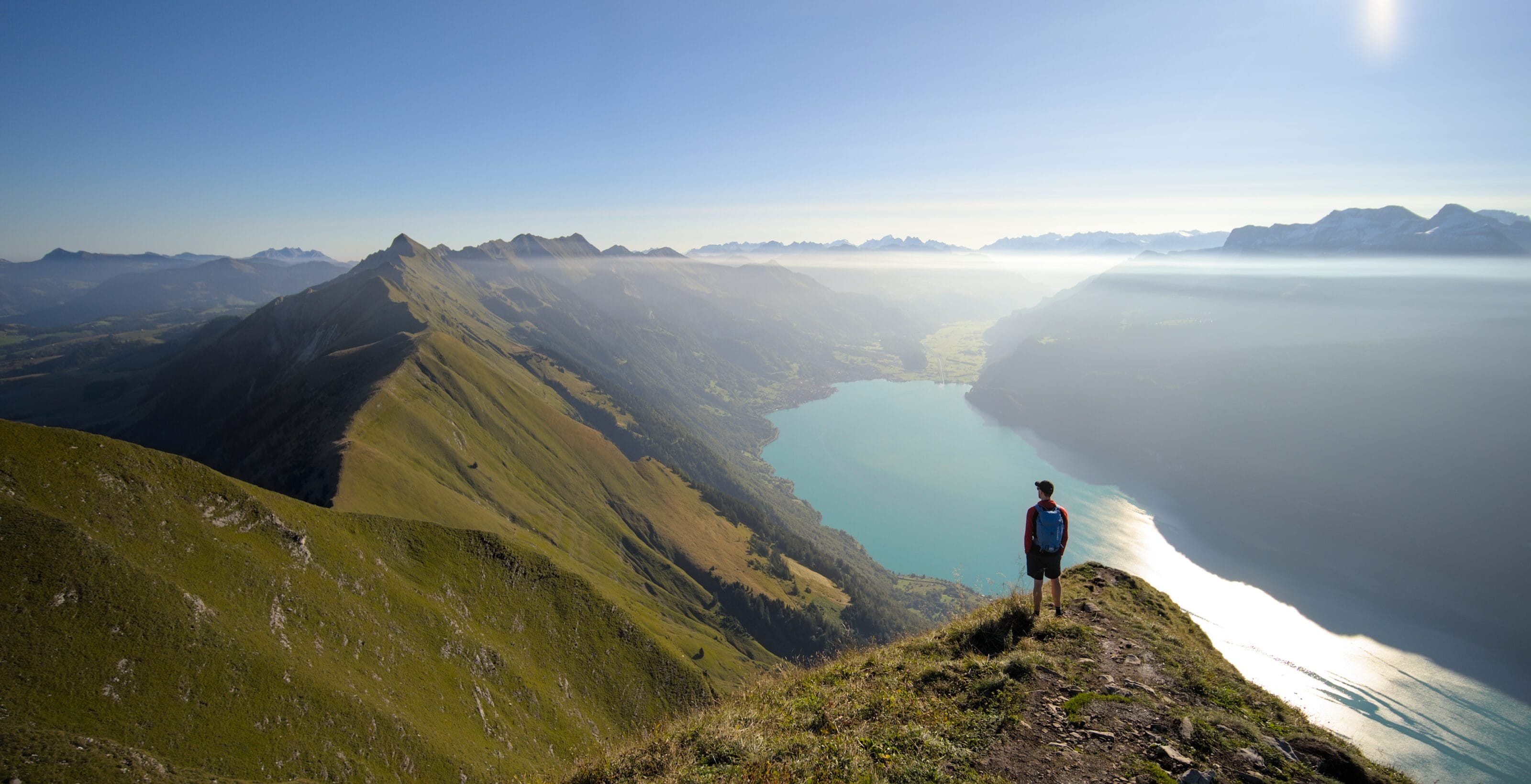
The Hardergrat represents the pinnacle of ridge hiking in the Swiss Alps. This extraordinary 24-kilometer trail traverses a razor-sharp grassy ridge high above the turquoise waters of Lake Brienz, connecting Interlaken to Brienzer Rothorn in what many consider Switzerland's most spectacular day hike.
What sets the Hardergrat apart from other alpine trails is its unique combination of accessibility and wildness. Unlike remote mountain routes requiring multi-day expeditions, you can reach this trail via public transport from major Swiss cities, yet once you're on the ridge, you'll feel completely isolated in one of Europe's most dramatic landscapes.
The trail's name translates to "hard ridge" in German, and it lives up to this reputation. For approximately 18 kilometers of the total route, you'll walk along a knife-edge ridge where the path is often just a few feet wide, with dramatic 1,500-meter drops on both sides. The views are constantly changing as you traverse a series of peaks including Suggiturm, Augstmatthorn, Tannhorn, and finally Brienzer Rothorn.
The geological formation of the Hardergrat is fascinating—it's actually comprised of three distinct ridge sections: the Hardergrat proper (toward Interlaken), the Riedergrat in the middle, and the Brienzergrat (toward Brienz). This creates a natural highway in the sky that offers unparalleled 360-degree views of the Bernese Alps, including the iconic Eiger, Mönch, and Jungfrau massif.
What makes this trail truly special is the sense of exposure and commitment it demands. Unlike many hiking trails where you can easily turn back or find shelter, the Hardergrat commits you to a full day of technical hiking with limited escape routes. This combination of physical challenge, technical difficulty, and stunning alpine scenery has earned it recognition as one of the world's premier ridge walks, attracting serious hikers from around the globe who seek to test themselves against Switzerland's most demanding day hike.
Route Options and Logistics
Understanding your route options is crucial for a successful Hardergrat adventure. From my research and experience, I've identified four main approaches, each with distinct advantages and challenges.
The Classic Route: Interlaken to Brienzer Rothorn
This is the traditional full Hardergrat experience, covering the complete 24-kilometer distance with 3,000 meters of elevation gain. Starting from Interlaken, you'll climb through forest to reach Harder Kulm (either on foot or via funicular), then traverse the entire ridge to finish at Brienzer Rothorn station.
The logistics are challenging—you need to start by 4:30-5:00 AM to catch the last train down at 5:40 PM from Brienzer Rothorn. The early start means hiking the first section in darkness, but you'll be rewarded with sunrise views from the ridge. This route demands excellent physical conditioning and careful time management.
The Smart Alternative: Brienzer Rothorn to Harder Kulm (My Recommendation)
After consulting with local guides and experienced hikers, I chose this reverse route, and I'm glad I did. Starting from Brienzer Rothorn reduces the elevation gain to 1,400 meters and allows you to tackle the technical sections while fresh rather than fatigued.
The key advantage is catching the 7:36 AM "early bird" train to Brienzer Rothorn at half price—a significant saving on Switzerland's expensive mountain transport. You'll finish at Harder Kulm, where the funicular runs until 9:10 PM in summer, giving you much more flexibility with timing and reducing the pressure to maintain a punishing pace.
💡 Insider Tip: The reverse route isn't just easier—it's smarter. You'll encounter the most technically challenging sections between Tannhorn and Brienzer Rothorn while you're fresh, rather than after 15+ kilometers of hiking.
The Hardcore Option: Full Loop
For elite trail runners and extreme athletes, the full loop involves starting in Interlaken, traversing to Brienzer Rothorn, then continuing to Brünigpass before returning along the lake—over 50 kilometers total. This is beyond most hikers' capabilities and requires running rather than walking significant portions.
The Sampler: Harder Kulm to Augstmatthorn
If you want to experience the Hardergrat without the full commitment, this 15-kilometer section offers spectacular ridge walking with slightly less technical difficulty. It's still challenging but allows for a more relaxed timeline and easier logistics.
For those interested in exploring other challenging Alpine adventures, check out our comprehensive guides to the Manitou Incline and other premium trail destinations.
Difficulty and Safety Considerations
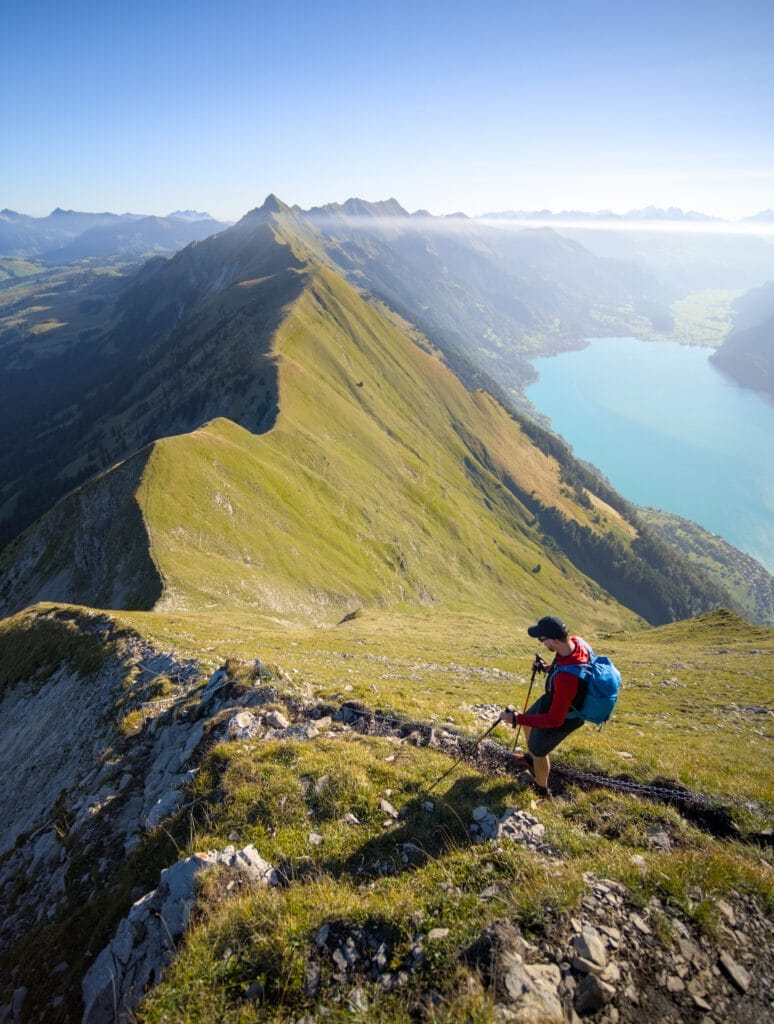
The Hardergrat's reputation as a dangerous trail isn't mere hyperbole—it's a serious undertaking that demands respect, preparation, and experience. Understanding the specific challenges is essential for a safe journey.
Swiss Alpine Club Difficulty Ratings
Most of the Hardergrat is rated T3-T4 on the Swiss Alpine Club scale, with one notorious T5 section after Tannhorn. T3 indicates "difficult mountain hiking" requiring surefootedness and some scrambling ability. T4 means "alpine hiking" with potential glacier crossings and exposure where a fall could be fatal. The T5 section involves actual mountaineering techniques.
What makes this particularly challenging is the sustained nature of the difficulty. Unlike many alpine routes with short technical sections, the Hardergrat maintains T3-T4 conditions for over 18 kilometers. Mental fatigue becomes as much of a factor as physical exhaustion.
The Reality of Exposure
The trail's most defining characteristic is its exposure. For much of the route, you're walking on a path just 1-2 meters wide with drops of 1,000-1,500 meters on both sides. While the trail is generally solid, loose rock, wet grass, or a momentary loss of balance could have catastrophic consequences.
The psychological challenge shouldn't be underestimated. Even experienced hikers can find the sustained exposure mentally exhausting. I witnessed several hikers turn back after experiencing anxiety on the exposed sections—there's no shame in recognizing your limits.
⚠️ Safety Reality Check: People do die on this trail. In 2020, a 20-year-old woman fell to her death, and fatalities occur most years. Respect the mountain and don't let social media pressure override good judgment.
Weather Dependency
The Hardergrat is absolutely weather-dependent. Wet conditions make the grassy slopes lethally slippery, while wind can knock you off balance on exposed sections. Cloud cover eliminates the views that justify the risk and makes navigation more difficult.
You need not just good weather on your hiking day, but at least 48 hours of dry conditions beforehand to ensure the trail has dried out. Switzerland's volatile mountain weather makes this a significant planning challenge—I know hikers who've waited a week for suitable conditions.
Physical Demands
Beyond technical difficulty, the Hardergrat is physically punishing. The constant ups and downs along the ridge, combined with the need to maintain concentration for 8-12 hours, create a unique challenge. Your legs might handle 24 kilometers, but can your focus remain sharp for the technical sections when you're hours into the hike?
The absence of water sources along the 20-kilometer ridge section adds another layer of difficulty. Carrying 4-5 liters of water significantly increases pack weight, while dehydration in hot conditions can lead to poor decision-making when precision is crucial.
My Personal Hardergrat Experience
After two years of planning and one false start due to weather, I finally tackled the Hardergrat in late September with perfect conditions. Here's the unvarnished truth about what it's really like to hike Switzerland's most famous ridge.
Pre-Dawn Preparation
My day began at 5:30 AM in Brienz, where I joined the queue for the 7:36 AM "early bird" train to Brienzer Rothorn. Even at this hour, the platform was busy with other Hardergrat hopefuls—a mix of serious Swiss hikers and international adventure seekers. The anticipation was palpable.
The 50-minute train journey up the mountain gave me time to mentally prepare and review my route. The historic steam locomotive chugged through tunnels and switchbacks, gradually revealing the magnitude of what lay ahead. At 8:30 AM, stepping off at Brienzer Rothorn station, I was hit by crisp mountain air and panoramic views that immediately justified the early start.
The First Technical Sections
The initial descent from Brienzer Rothorn quickly introduced the trail's character. Within 30 minutes, I was navigating my first knife-edge section—a narrow, grassy ridge with dramatic drops on both sides. My heart rate spiked, and I immediately understood why this trail has such a fearsome reputation.
The key lesson I learned early was pace management. Unlike typical hiking where you can push through difficult sections quickly, the Hardergrat demands deliberate, careful movement. Rushing leads to mistakes, and mistakes on this trail have serious consequences.
Wildlife Encounters
One unexpected highlight was the incredible wildlife. I encountered a family of ibex near Tannhorn, their casual confidence on the steep terrain putting my nervous scrambling into perspective. They seemed amused by the steady stream of hikers struggling along "their" ridge. I also spotted several ptarmigan and heard the distinctive calls of Alpine choughs echoing off the cliffs.
🦌 Wildlife Tip: Give ibex plenty of space and never block their paths. They have right of way and can become aggressive if cornered. I learned this when one massive male stood his ground until I found an alternative route around him.
The Notorious T5 Section
The most challenging part came after Tannhorn—a steep, exposed descent that truly justified the T5 rating. Here, the path narrowed to barely shoulder-width, with loose rock and a fixed cable for assistance. I had to descend backwards in places, using both hands and feet while my pack threatened to throw off my balance.
This 200-meter section took me nearly 45 minutes to navigate safely. Several other hikers were visibly shaken, and I helped one woman who had frozen with fear halfway down. It's moments like these that remind you why proper preparation and mental readiness are essential.
Lessons Learned
By the time I reached Harder Kulm 9.5 hours later, I had learned valuable lessons that no guidebook could have taught me. The physical challenge was significant but manageable with proper fitness. The mental challenge was far greater than anticipated—maintaining focus for such extended exposure requires a different kind of endurance.
My biggest mistake was underestimating water needs. Despite carrying 4 liters, I finished with barely half a liter remaining, and the September sun was far more intense on the exposed ridge than expected. For summer attempts, I'd recommend 5-6 liters minimum.
The reward, however, was proportional to the challenge. Standing on Harder Kulm's viewing platform, looking back at the serpentine ridge I'd just traversed, provided a sense of accomplishment unlike any other hike. The Hardergrat isn't just about reaching a destination—it's about proving to yourself that you can handle Switzerland's most demanding trail.
Essential Gear and Equipment
After completing the Hardergrat and talking with dozens of other hikers, I've identified the essential gear that can make the difference between a successful adventure and a dangerous situation. Every item in your pack should earn its weight.
Footwear: Your Foundation
Your choice of footwear is absolutely critical on the Hardergrat. The combination of technical terrain, varying conditions, and long distance demands boots that excel in multiple areas. After testing several options, I recommend the Columbia Men's Crestwood Hiking Shoe for its exceptional grip and ankle support.
The key features you need are aggressive tread for wet grass, ankle support for uneven terrain, and waterproofing for morning dew conditions. Many hikers make the mistake of choosing trail runners, but the technical sections demand the stability that only proper hiking boots provide.
Trekking Poles: Stability and Safety
Trekking poles aren't optional on the Hardergrat—they're essential safety equipment. The Cascade Mountain Tech Carbon Fiber Trekking Poles proved invaluable during my hike, particularly on steep descents where they provided crucial stability.
Carbon fiber poles offer the best strength-to-weight ratio, which matters when you're carrying them for 10+ hours. The quick-lock system allows for rapid adjustments as terrain changes, and the comfortable grips reduce hand fatigue during long descents.
Backpack and Hydration System
A proper daypack is crucial for carrying the substantial gear load required for the Hardergrat. The IGOLUMON 40L Hiking Backpack offers the perfect capacity for a day hike while remaining lightweight and comfortable during long carries.
For hydration, I strongly recommend a combination approach: a 3-liter hydration bladder like the BPA-Free Hydration Bladder for easy access while walking, plus backup water bottles. The bladder allows you to drink without stopping, crucial when maintaining pace on technical sections.

Navigation and Safety Equipment
While the trail is generally well-marked, conditions can change rapidly in the mountains. The Garmin Instinct 2 GPS Watch provides reliable navigation, weather alerts, and emergency features that could save your life in deteriorating conditions.
Additional safety essentials include a loud emergency whistle, first aid kit, emergency shelter, and headlamp with extra batteries. The mountain environment can change from perfect conditions to dangerous in minutes, so redundant safety systems are crucial.
Clothing and Weather Protection
Layer management is crucial on the Hardergrat where you'll encounter dramatically different conditions from pre-dawn cold to midday sun exposure. Start with moisture-wicking base layers, add insulating mid-layers, and carry a lightweight but durable shell jacket for weather protection.
Sun protection cannot be overstated—the combination of altitude and reflection off Lake Brienz creates intense UV conditions. A wide-brimmed hat, glacier glasses, and SPF 50+ sunscreen are mandatory. I learned this the hard way with painful sunburn on my neck despite applying sunscreen in the morning.
For those planning other challenging hikes, consider exploring our guides to premium hiking footwear and specialized outdoor gear for your next alpine adventure.
Best Time and Weather Conditions
Timing your Hardergrat attempt correctly can mean the difference between an epic adventure and a dangerous disaster. After experiencing perfect conditions and witnessing others struggle with poor weather choices, I've learned that patience and flexibility are just as important as physical preparation.
Seasonal Considerations
The Hardergrat season typically runs from early July through mid-October, but the optimal window is much narrower. July can still have snow patches on north-facing slopes, while October brings early winter storms. The sweet spot is August through mid-September, with late September being my personal recommendation.
September offers several advantages: cooler temperatures reduce water needs and heat stress, autumn colors add spectacular beauty to the already stunning scenery, and tourist crowds thin out significantly. The weather tends to be more stable, with longer periods of high pressure systems.
However, September also brings shorter daylight hours, so early starts become even more critical. During my late September attempt, sunrise wasn't until 7:15 AM, meaning I was hiking the first sections in darkness even with an 8:30 AM start from Brienzer Rothorn.
Weather Window Requirements
The Hardergrat demands perfect weather conditions, not just for the hiking day but for at least 48 hours beforehand. Wet grass on the steep, exposed sections becomes lethally slippery, and even morning dew can create dangerous conditions that don't improve until late morning.
Your ideal weather window includes: clear skies with excellent visibility, light winds (under 15 km/h), no precipitation for minimum 48 hours prior, and stable high-pressure conditions forecast to continue. Swiss mountain weather can change rapidly, so even perfect morning conditions don't guarantee afternoon safety.
🌦️ Weather Warning: Never attempt the Hardergrat with any chance of precipitation. I've seen rescue helicopters called for hikers caught in sudden storms. The exposed ridge offers no shelter, and retreat becomes impossible in poor visibility.
Time of Day Strategy
Your start time depends heavily on your chosen route direction. For the reverse route (Brienzer Rothorn to Harder Kulm), the 7:36 AM train provides an ideal start, putting you on the ridge by 8:30 AM. This timing allows you to complete technical sections in good light while finishing before afternoon weather deterioration.
For the traditional direction (Interlaken to Brienzer Rothorn), a 4:00-4:30 AM start is mandatory to catch the last train. This means hiking the initial forest section by headlamp, which adds complexity but allows you to reach the ridge for sunrise—a magical experience that partially compensates for the brutal early start.
Crowd Management
The Hardergrat's popularity has exploded in recent years, leading to potentially dangerous crowding on narrow sections. Peak season weekends can see 100+ hikers attempting the trail, creating bottlenecks at technical sections where passing is difficult or impossible.
Weekday attempts, particularly Tuesday through Thursday, offer significantly better conditions with fewer crowds. If you must hike weekends, consider shoulder season dates in early July or late September when crowds thin but conditions remain good.
Plan B Alternatives
Switzerland's unpredictable weather means you should always have backup plans. Excellent alternatives during poor Hardergrat conditions include the Schynige Platte ridge walk, Brienzer Rothorn summit hike, or exploring the safer sections around Augstmatthorn.
Having flexible accommodations and transport arrangements allows you to wait for optimal conditions rather than forcing a dangerous attempt. Many successful Hardergrat hikers spend several days in the region, waiting for the perfect weather window—patience that ultimately ensures both safety and the best possible experience.
User Review Insights
Amazon Review - Trail Runner Sarah: "Used my Garmin watch on the Hardergrat and it was a lifesaver when clouds rolled in near Tannhorn. The GPS kept us on route when visibility dropped to 20 meters. Battery lasted the full 11-hour trek with room to spare."
Reddit User Experience: "Did the Hardergrat in perfect September weather and it was incredible, but saw another group the next day turn back due to morning frost making the grass slippery. Weather timing really is everything on this trail."
Quora Hiker Feedback: "My advice: bring way more water than you think you need. The combination of altitude, sun reflection off the lake, and physical exertion had me drinking constantly. 5 liters was barely enough on a cool October day."
Frequently Asked Questions
How difficult is the Hardergrat trail and what experience do I need?
The Hardergrat is rated T3-T4 (with one T5 section) on the Swiss Alpine Club scale, making it challenging for experienced hikers only. You need solid mountaineering experience, comfort with exposure, and excellent physical fitness. The trail involves 24km with 3000m elevation gain, narrow knife-edge sections with significant drops, and requires 10-12 hours to complete. I recommend prior experience with technical alpine trails, comfort on Class 3 terrain, and proven ability to hike 20+ km with substantial elevation gain before attempting this route. Mental preparation is equally important—the sustained exposure can be psychologically demanding even for experienced hikers.
What is the best direction to hike the Hardergrat - Interlaken to Brienz or vice versa?
From my experience and local recommendations, hiking from Brienzer Rothorn to Harder Kulm (the reverse direction) is optimal. This reduces elevation gain from 3000m to 1400m and allows you to tackle the technical sections while fresh. You can catch the early 7:36 AM train to Brienzer Rothorn at half price, then finish at Harder Kulm where the funicular runs late into evening, giving you more flexibility with timing. The most technical section after Tannhorn becomes an ascent rather than a dangerous descent, significantly improving safety margins. Most local guides now recommend this direction, especially for first-time attempts.
When is the best time to hike the Hardergrat and what weather conditions should I avoid?
The optimal window is July through mid-September, with September being ideal for cooler temperatures and fewer crowds. Never attempt the Hardergrat after rain - wait at least 2 dry days as wet grass becomes extremely slippery. Avoid windy conditions as gusts can be dangerous on exposed sections, and never hike in fog or low visibility. I learned this firsthand when we had to wait out clouds during our attempt - perfect weather is non-negotiable for safety. Check weather forecasts 5-7 days ahead and be prepared to postpone if conditions aren't ideal. The trail requires stable high pressure systems with minimal wind and clear skies.
How much water should I bring and what gear is essential for the Hardergrat?
Bring 4-5 liters of water minimum - there are no refill points along the 20km ridge section. Essential gear includes hiking boots with excellent grip, trekking poles for stability, sun protection (hat, sunglasses, SPF 50+), emergency whistle, first aid kit, and headlamp for early starts. From my experience, lightweight layers are crucial as temperatures vary dramatically from pre-dawn starts to midday exposure on the ridge. A GPS device or detailed map is essential for navigation, especially if weather deteriorates. Emergency shelter and extra food provide crucial backup if you're delayed or conditions change. Quality gear can mean the difference between success and disaster on this technical route.
Are there emergency exit routes if I need to abandon the hike partway through?
Yes, several bail-out options exist along the route, though they shouldn't be taken lightly. From Blasenhubel, you can descend to Oberried (2.5 hours). At Älgäulücke, there's another trail to Oberried. From Augstmatthorn, you can take the trail to Lombachalp and catch a bus. However, once you're past Tannhorn toward Brienzer Rothorn, your main options are completing the route or calling for expensive helicopter rescue. These escape routes are themselves challenging descents through steep terrain, so plan conservatively and don't count on them as easy exits. Each bail-out adds 2-4 hours to your day and may involve tricky navigation, so prevention through proper preparation is far better than cure.
Conclusion
The Hardergrat represents the pinnacle of Swiss day hiking—a trail that demands respect, preparation, and experience while rewarding successful completion with memories that last a lifetime. After walking every meter of this legendary ridge, I can confidently say it lives up to its reputation as both one of the world's most beautiful and most challenging single-day hikes.
My journey on the Hardergrat taught me lessons that extend far beyond hiking technique. This trail strips away pretense and forces you to confront your limits—physical, mental, and emotional. The sustained exposure and technical demands create a unique challenge that tests not just your fitness but your judgment, patience, and ability to perform under pressure.
Pros of the Hardergrat
- Unparalleled alpine scenery and ridge walking
- Accessible via public transport from major cities
- Life-changing sense of accomplishment
- Incredible wildlife viewing opportunities
- Well-marked route with some safety equipment
Cons of the Hardergrat
- Significant risk of serious injury or death
- Extremely weather-dependent with narrow windows
- Requires substantial hiking experience
- Long, demanding day with no margin for error
- Expensive rescue costs if things go wrong
For those considering attempting the Hardergrat, my advice is simple: take it seriously. This isn't a trail for bucket-list hikers or social media adventures—it's a genuine mountaineering challenge that requires proper preparation, experience, and judgment. If you have any doubts about your ability to handle sustained technical terrain with serious exposure, consider the excellent alternatives I've mentioned or build your skills on less committing routes first.
However, if you have the necessary experience and respect for the mountains, the Hardergrat offers an experience unlike any other. The combination of technical challenge, natural beauty, and pure adventure creates memories that will stay with you forever. Standing on Harder Kulm after completing the full traverse, looking back at the serpentine ridge you've just conquered, provides a sense of accomplishment that few other adventures can match.
Remember that the mountains will always be there, but the opportunity to hike them safely depends on making good decisions. Wait for perfect conditions, ensure you have the proper gear and experience, and don't let external pressure override your judgment. The Hardergrat will test everything you have to give—make sure you're truly ready before you accept that challenge.
For more epic hiking adventures and gear recommendations, explore our comprehensive guides to premium hiking footwear and discover other world-class trail destinations that will challenge and inspire your next adventure.
Ready for Your Next Adventure?
Discover more world-class hiking destinations and gear recommendations that will elevate your outdoor adventures to the next level.
Explore More Epic Trails