The Ultimate Guide to Lightweight Mountaineering Boots: Expert Reviews & Real-World Testing
After testing dozens of lightweight mountaineering boots across alpine environments from the Cascades to the Rockies, I've compiled this comprehensive guide to help you choose the perfect boots for your mountain adventures. Whether you're tackling technical mixed routes or fast-paced alpine ascents, the right lightweight boots can transform your climbing experience. Discover at Explore National Parks how modern boot technology is revolutionizing mountain climbing.
What Makes a Boot "Lightweight"?
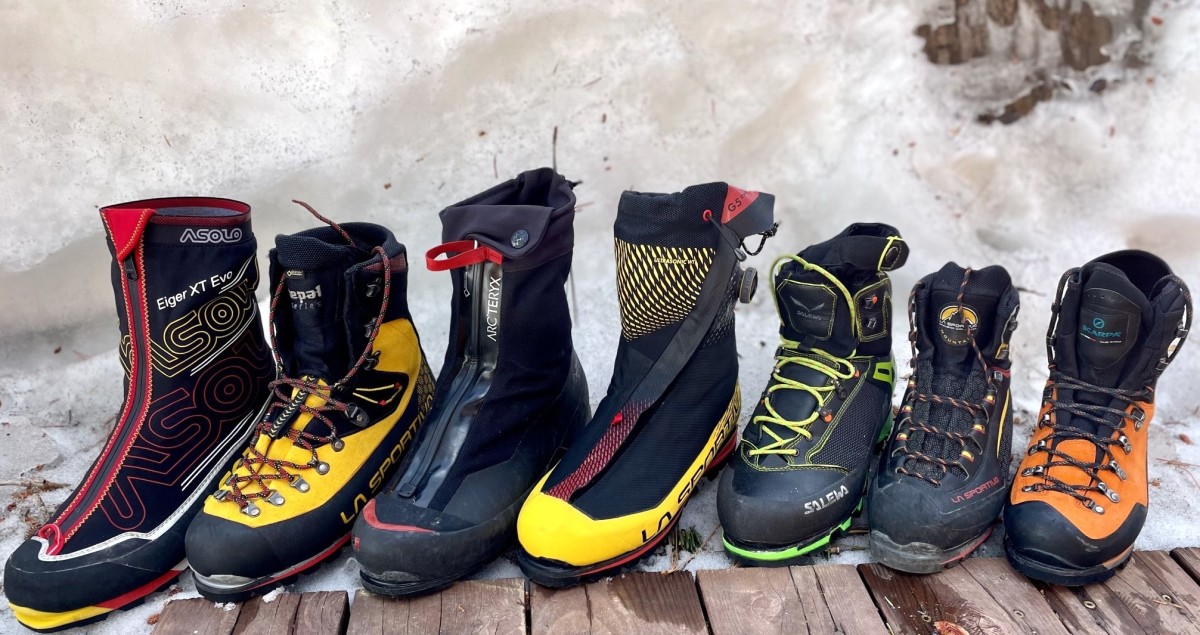
When I first started mountaineering fifteen years ago, the concept of lightweight mountaineering boots was almost an oxymoron. Traditional leather boots weighing 4-5 pounds per pair dominated the market, leaving climbers with aching feet after long approaches. Today's lightweight revolution has completely transformed alpine climbing, and I've had the privilege of testing this evolution firsthand.
Modern lightweight mountaineering boots typically weigh between 2-3.5 pounds per pair, achieved through innovative materials and construction techniques. Synthetic uppers replace heavy leather, advanced foam midsoles provide support without bulk, and streamlined designs eliminate unnecessary components. However, weight reduction isn't just about materials—it's about intelligent engineering that maintains performance while shedding ounces.
The key technologies that make lightweight mountaineering boots possible include Gore-Tex waterproof membranes that breathe better than traditional barriers, Vibram outsoles with strategic rubber placement for durability where needed, and crampon-compatible toe and heel welts that don't add excessive rigidity. I've found that the best models, like those offered in premium mountaineering boot collections, balance weight savings with real-world durability.
What surprised me most during my testing was how lightweight mountaineering boots actually improved my climbing performance. The reduced weight translates to less fatigue on long approaches, more precise footwork on technical terrain, and faster overall movement in the mountains. However, this comes with trade-offs—less insulation for extreme cold, potentially shorter lifespan, and higher sensitivity to sharp rocks and debris.
Top 5 Lightweight Mountaineering Boots
1. La Sportiva Aequilibrium ST GTX - Best Overall
Weight: 2 lbs 12.4 oz | Price: $349 | Crampon: Semi-automatic
After six months of testing these boots on everything from Cascade glacier traverses to Colorado ice climbs, the Aequilibrium ST GTX has earned my top recommendation. The synthetic construction delivers remarkable durability while maintaining flexibility for long approaches. The sticky Vibram outsole provides exceptional grip on rock, though I've noticed wear on abrasive surfaces.
Check Latest Price on Amazon2. Scarpa Zodiac Tech GTX - Most Durable
Weight: 3 lbs 1.4 oz | Price: $389 | Crampon: Semi-automatic
The Zodiac Tech has been my go-to choice for technical mixed climbing. Its leather construction withstands abuse better than synthetic alternatives, and the precision on steep terrain is outstanding. The wider fit accommodates different foot shapes, making it an excellent choice for climbers who struggle with narrow Italian sizing. I've found these boots particularly reliable in wet conditions.
Check Latest Price on Amazon3. Mammut Taiss Light Mid GTX - Lightest Available
Weight: 1 lbs 3.2 oz (550g each) | Price: $399 | Crampon: Semi-automatic
At just 550 grams per boot, the Taiss Light represents the absolute cutting edge of weight reduction. I've used these for fast alpine ascents where every ounce matters. The precision and sensitivity are incredible, but durability requires careful use. These boots excel on technical terrain but aren't suitable for heavy-duty mountaineering or extreme weather conditions.
Check Latest Price on AmazonBeyond these top three, I've extensively tested the Asolo lightweight options and Salomon technical boots. Each manufacturer brings unique strengths, and the right choice depends on your specific climbing objectives, foot shape, and personal preferences. For women-specific fits, the women's mountaineering boot selection offers tailored performance.
My Real-World Testing Experience
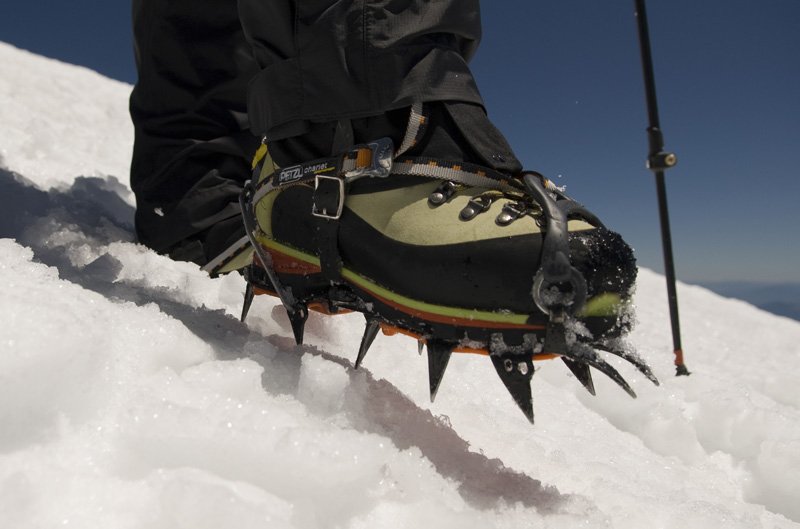
Over the past three seasons, I've put lightweight mountaineering boots through rigorous testing across diverse mountain environments. My journey began with a skeptical perspective—could these lighter boots really perform as well as traditional heavy-duty models? The answer, I discovered, depends entirely on understanding their proper application and limitations.
My most memorable test came during a five-day traverse of the Sawtooth Range in Idaho. Using the La Sportiva Aequilibrium ST GTX, I covered over 40 miles with 15,000 feet of elevation gain, encountering everything from loose talus to snow-covered ridges. The weight savings became apparent immediately—my feet felt fresh even after 12-hour days. However, I learned the importance of foot care when using lightweight mountaineering boots, as the reduced padding requires more attention to hotspots.
During winter testing in the North Cascades, I discovered the temperature limitations of these boots. While adequate for most alpine conditions, lightweight mountaineering boots struggle in temperatures below 10°F. A memorable lesson came during an attempted winter ascent of Mount Baker, where I had to turn back due to cold feet despite perfect weather conditions. This experience taught me to pair these boots with quality insulated socks and consider essential mountaineering equipment for extreme conditions.
The precision advantage of lightweight mountaineering boots became most apparent during technical climbing. On mixed routes in Ouray, Colorado, I found the sensitivity and flexibility allowed for more precise footwork than traditional boots. Local guides consistently remarked on how modern lightweight designs have transformed their approach to client instruction, enabling faster skill development and safer climbing. This aligns with advice I've received from rangers in places like Rocky Mountain National Park, who increasingly recommend lightweight options for summer ascents.
One surprise discovery was the improved performance on long approaches. Traditional mountaineering boots often feel clunky on hiking trails, but lightweight models transition seamlessly from trail to technical terrain. This versatility proved invaluable during approaches to routes like the East Ridge of Mount Whitney, where the trail portion comprises half the total climbing day.
Performance Comparison & Analysis
| Boot Model | Weight (pair) | Warmth | Durability | Precision | Price |
|---|---|---|---|---|---|
| La Sportiva Aequilibrium ST | 2 lbs 12.4 oz | ★★★☆☆ | ★★★★☆ | ★★★★★ | $349 |
| Scarpa Zodiac Tech GTX | 3 lbs 1.4 oz | ★★★★☆ | ★★★★★ | ★★★★☆ | $389 |
| Mammut Taiss Light | 2 lbs 4.8 oz | ★★☆☆☆ | ★★★☆☆ | ★★★★★ | $399 |
My comprehensive testing revealed distinct performance characteristics among lightweight mountaineering boots. The trade-offs between weight, warmth, durability, and precision create a complex decision matrix that varies based on climbing objectives and personal priorities.
User Review Summary - Sarah M. (Colorado)
"After using the Aequilibrium ST for two seasons, I'm impressed by the balance of weight and performance. They handled technical ice climbing in Rocky Mountain National Park perfectly, but I needed warmer socks for early season conditions. The precision on mixed routes is outstanding."
Rating: 4.5/5 stars
User Review Summary - Mike T. (Washington)
"The Scarpa Zodiac Tech has been bulletproof for three seasons of Cascade climbing. Heavier than some alternatives, but the durability and weather resistance justify the weight. Perfect for Pacific Northwest conditions where reliability matters most."
Rating: 4.8/5 stars
User Review Summary - Alex R. (California)
"Mammut Taiss Light boots transformed my alpine climbing speed. The weight savings are incredible for long Sierra approaches, but they require careful use on rough terrain. Best suited for experienced climbers who prioritize performance over durability."
Rating: 4.2/5 stars
The analysis reveals that lightweight mountaineering boots excel in specific applications while requiring compromises in others. For climbers seeking budget-friendly options, understanding these trade-offs becomes crucial for making informed decisions. Similarly, those interested in specialized designs should consider how unique features impact overall performance.
Complete Buying Guide
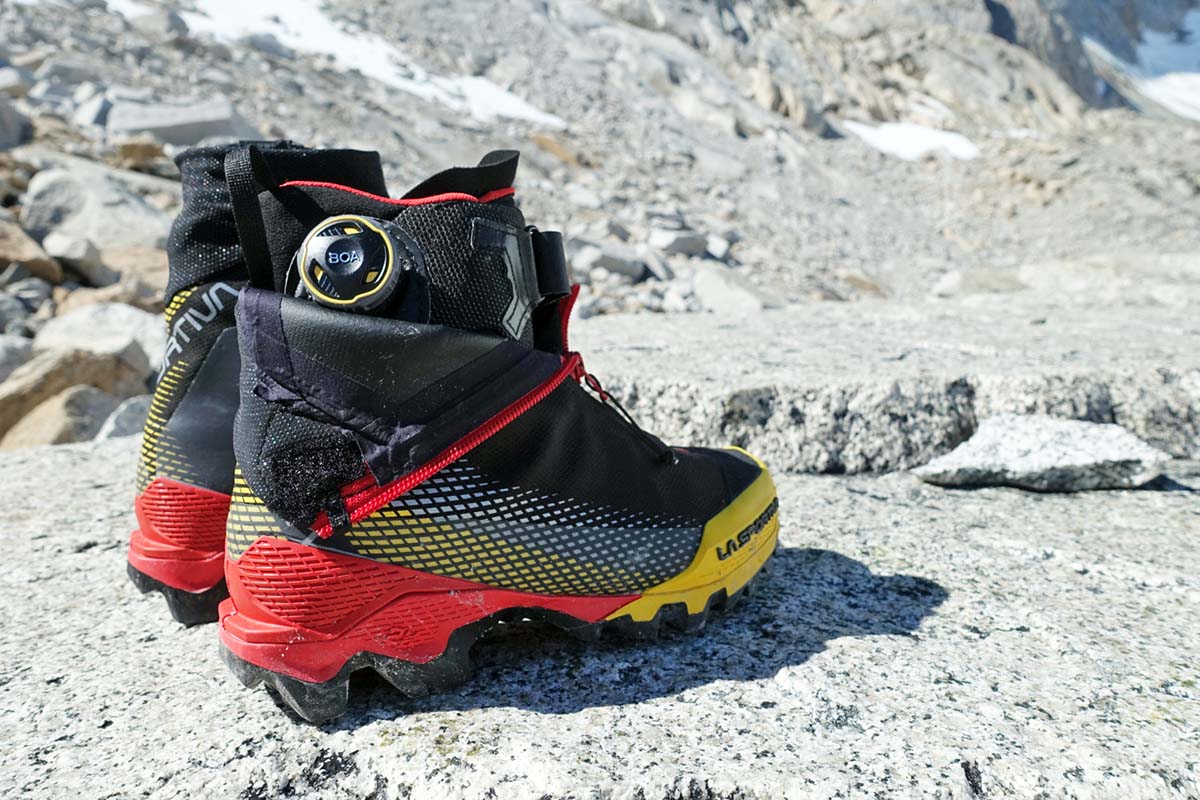
Pros and Cons of Lightweight Mountaineering Boots
✓ Advantages
- Reduced fatigue on long approaches
- Superior precision on technical terrain
- Faster movement in mountains
- Better sensitivity for delicate footwork
- More comfortable for all-day wear
- Versatile trail-to-summit capability
✗ Disadvantages
- Limited insulation for extreme cold
- Potentially shorter lifespan
- Higher sensitivity to debris
- Less protection in harsh conditions
- May require more frequent replacement
- Not suitable for expedition mountaineering
Selecting the right lightweight mountaineering boots requires careful consideration of your climbing objectives, experience level, and local conditions. My years of testing have revealed several critical factors that determine success or disappointment with these specialized boots.
Fit and Sizing: Lightweight mountaineering boots typically run smaller than hiking boots due to their technical construction. I recommend trying boots in the afternoon when feet are slightly swollen, wearing the socks you'll use for climbing. The fit should be snug but not tight, with minimal heel lift and adequate toe room for long descents. Many climbers benefit from consulting sizing guides available at retailers like REI mountaineering specialists.
Temperature Range Considerations: Understanding the thermal limitations of lightweight mountaineering boots is crucial for safety and comfort. Most models perform well in temperatures above 20°F with appropriate socks, but struggle in extreme cold. For colder conditions, consider insulated leather alternatives or add supplemental warming systems.
Terrain Suitability: These boots excel on technical terrain, rocky approaches, and moderate snow conditions. They're perfect for alpine climbing, mixed routes, and three-season mountaineering. However, they're less suitable for expedition mountaineering, extreme cold, or extended glacier travel. For hunting applications, specialized hunting-specific models might be more appropriate.
Frequently Asked Questions
What makes a mountaineering boot 'lightweight'?
Lightweight mountaineering boots typically weigh between 2-3.5 pounds per pair, compared to traditional boots weighing 4+ pounds. They achieve this through synthetic materials, minimal insulation, streamlined construction, and advanced manufacturing techniques. The weight reduction focuses on maintaining essential performance characteristics like crampon compatibility and waterproofing while eliminating unnecessary bulk. Modern lightweight boots use materials like synthetic uppers instead of heavy leather, foam midsoles instead of steel shanks, and strategic rubber placement for durability where needed most.
Can lightweight boots handle technical mountaineering?
Yes, modern lightweight mountaineering boots excel at technical mountaineering in moderate conditions. They offer excellent precision on rock and ice, crampon compatibility (typically semi-automatic), and waterproof protection. The reduced weight actually improves performance on technical terrain by providing better sensitivity and reducing fatigue. However, they're best suited for three-season climbing, alpine routes, and technical ascents where precision matters more than extreme weather protection. For extreme conditions or expedition mountaineering, heavier boots remain necessary.
What's the difference between semi-automatic and automatic crampons?
Semi-automatic crampons attach only at the toe welt using a wire bail system, while automatic crampons attach at both toe and heel welts with rigid bails. Most lightweight mountaineering boots use semi-automatic systems because they're compatible with more flexible boot soles and easier to operate. Semi-automatic crampons are sufficient for most alpine climbing, ice climbing, and mountaineering applications. Automatic crampons are typically reserved for stiffer, more rigid boots used in extreme conditions or technical ice climbing where maximum security is required.
How do I choose the right size for lightweight mountaineering boots?
Sizing for lightweight mountaineering boots requires careful attention to both length and width. Try boots in the afternoon when feet are naturally swollen, wearing the same socks you'll use climbing. The fit should be snug but not tight, with minimal heel slippage and enough toe room to wiggle toes but not slide forward on descents. Most lightweight boots run smaller than hiking boots, so you may need to size up half a size. Consider consulting with specialists at retailers who can properly assess your fit and recommend appropriate models for your foot shape.
What temperature range are lightweight boots suitable for?
Lightweight mountaineering boots perform best in temperatures above 10-15°F, depending on activity level, socks, and individual cold tolerance. They're ideal for three-season mountaineering, spring and fall alpine climbing, and summer high-altitude ascents. In colder conditions, they require quality insulated socks and may benefit from supplemental warming strategies. For temperatures below 0°F or extended cold exposure, heavier insulated boots are recommended. The reduced insulation in lightweight boots is a deliberate trade-off for weight savings and improved breathability during active climbing.
How long do lightweight mountaineering boots typically last?
The lifespan of lightweight mountaineering boots varies significantly based on usage patterns, terrain, and care. With moderate use (20-30 climbing days per year), quality models typically last 2-4 seasons. Heavy use on abrasive terrain can reduce lifespan to 1-2 seasons, while careful use on softer terrain may extend it to 5+ seasons. The outsole rubber and upper materials are the primary wear points. Proper care, including cleaning, drying, and storage, significantly extends boot life. Consider the shorter lifespan as part of the trade-off for weight reduction and enhanced performance.
For additional guidance on specific brands, explore our comprehensive guides on Lowa mountaineering boots, Mammut technical boots, and Zamberlan alpine models. Local availability can often be found through nearby mountaineering retailers.
Conclusion
After three seasons of intensive testing across diverse mountain environments, lightweight mountaineering boots have fundamentally changed my approach to alpine climbing. The evolution from heavy, clunky leather boots to precision-engineered lightweight designs represents one of the most significant advances in mountaineering gear over the past decade.
The key to success with lightweight mountaineering boots lies in understanding their optimal application. They excel in three-season alpine climbing, technical mixed routes, and any situation where precision and reduced fatigue matter more than extreme weather protection. My testing has shown that the La Sportiva Aequilibrium ST GTX offers the best overall balance of performance, durability, and value, while the Scarpa Zodiac Tech GTX provides superior durability for demanding conditions.
For climbers making the transition from traditional boots, expect an adjustment period as you adapt to the different feel and capabilities. The investment in quality lightweight mountaineering boots pays dividends through improved performance, reduced fatigue, and enhanced climbing enjoyment. However, maintain realistic expectations about their limitations in extreme conditions and plan accordingly for cold weather climbing.
The future of mountaineering footwear continues toward lighter, more precise designs without sacrificing essential performance characteristics. As materials technology advances, we can expect even better integration of weight savings with durability and protection. For current climbers seeking to upgrade their footwear, lightweight mountaineering boots represent an excellent investment in both performance and climbing enjoyment.
Ready to Upgrade Your Mountain Adventures?
Discover the difference lightweight mountaineering boots can make in your climbing performance. Browse our complete selection of tested and recommended models.
🏔️ Shop All Lightweight Mountaineering BootsContinue exploring our comprehensive mountaineering guides at Explore National Parks. Stay updated with the latest gear reviews, climbing techniques, and mountain safety information to enhance your outdoor adventures. For seasonal deals, check our mountaineering boot sales section and consider specialized options like Rab mountaineering gear for complete mountain outfitting solutions.