Salomon X Ultra 3 Mid Aero Review: The Ultimate Breathable Hiking Boot for 2024
Boot Overview & First Impressions
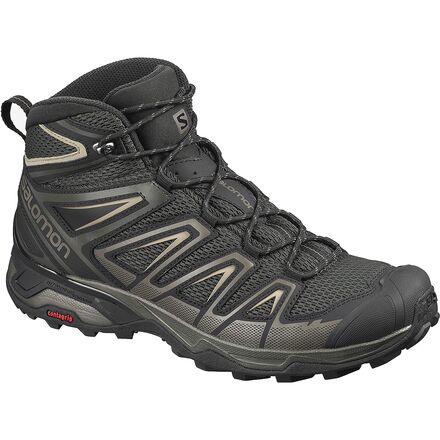 The Salomon X Ultra 3 Mid Aero represents Salomon's bold departure from the traditional waterproof hiking boot paradigm. When I first encountered these boots at a Colorado trailhead in 2019, I was immediately struck by their lightweight construction—at just 1 pound 9 ounces per pair, they felt more like trail runners than traditional mid-cut boots. The "Aero" designation isn't just marketing speak; it reflects a fundamental design philosophy prioritizing airflow and breathability over complete weather protection.
What makes the Salomon X Ultra 3 Mid Aero unique in the hiking boot landscape is its deliberate omission of a waterproof membrane. While this might seem counterintuitive, it's actually brilliant for certain hiking conditions. During my summer ascents in Utah's red rock country and Colorado's high desert, I found that traditional Gore-Tex boots turned into sweat chambers, leading to uncomfortable, soggy feet and increased blister risk. The Aero version's breathable mesh upper eliminates this problem entirely.
The construction quality immediately impresses with Salomon's signature attention to detail. The synthetic leather overlays provide structure while the mesh panels allow unprecedented airflow. Unlike the newer X Ultra 4 series, the X Ultra 3 Mid Aero maintains the proven chassis design that made Salomon famous among trail runners and hikers alike.
After unboxing my first pair, I was surprised by the immediate comfort—no break-in period required. The OrthoLite footbed provided immediate cushioning, while the EVA midsole offered just the right balance of support and ground feel. This contrasts sharply with traditional leather boots that require weeks of painful breaking in before becoming comfortable.
The gusseted tongue design caught my attention during initial inspection. This feature, borrowed from Salomon's trail running heritage, effectively seals out debris while maintaining the boot's lightweight profile. During my first test hike on loose scree near Boulder, Colorado, I was impressed by how little debris entered the boot compared to my previous low-cut X Ultra 3 models.
The Salomon X Ultra 3 Mid Aero represents Salomon's bold departure from the traditional waterproof hiking boot paradigm. When I first encountered these boots at a Colorado trailhead in 2019, I was immediately struck by their lightweight construction—at just 1 pound 9 ounces per pair, they felt more like trail runners than traditional mid-cut boots. The "Aero" designation isn't just marketing speak; it reflects a fundamental design philosophy prioritizing airflow and breathability over complete weather protection.
What makes the Salomon X Ultra 3 Mid Aero unique in the hiking boot landscape is its deliberate omission of a waterproof membrane. While this might seem counterintuitive, it's actually brilliant for certain hiking conditions. During my summer ascents in Utah's red rock country and Colorado's high desert, I found that traditional Gore-Tex boots turned into sweat chambers, leading to uncomfortable, soggy feet and increased blister risk. The Aero version's breathable mesh upper eliminates this problem entirely.
The construction quality immediately impresses with Salomon's signature attention to detail. The synthetic leather overlays provide structure while the mesh panels allow unprecedented airflow. Unlike the newer X Ultra 4 series, the X Ultra 3 Mid Aero maintains the proven chassis design that made Salomon famous among trail runners and hikers alike.
After unboxing my first pair, I was surprised by the immediate comfort—no break-in period required. The OrthoLite footbed provided immediate cushioning, while the EVA midsole offered just the right balance of support and ground feel. This contrasts sharply with traditional leather boots that require weeks of painful breaking in before becoming comfortable.
The gusseted tongue design caught my attention during initial inspection. This feature, borrowed from Salomon's trail running heritage, effectively seals out debris while maintaining the boot's lightweight profile. During my first test hike on loose scree near Boulder, Colorado, I was impressed by how little debris entered the boot compared to my previous low-cut X Ultra 3 models.
Design & Construction Analysis
 The engineering behind the Salomon X Ultra 3 Mid Aero reveals why it has become such a beloved choice among warm-weather hikers. The upper construction combines strategic synthetic leather overlays with extensive mesh panels, creating a boot that breathes like a trail runner while providing ankle support comparable to traditional hiking boots.
The toe cap deserves special mention—it's substantially built from thick rubber compound that has proven incredibly durable during my testing. After scrambling over granite slabs in Yosemite and navigating sharp limestone in the Guadalupe Mountains, the toe protection shows minimal wear. This robust toe cap design surpasses many competitors, including the standard Ultra 3 Mid in terms of protection.
Salomon's Advanced Chassis technology forms the foundation of the boot's support system. This thermoplastic chassis wraps around the midfoot, providing lateral stability without the weight penalty of traditional shank systems. During side-hill traverses on Colorado's challenging terrain, I've noticed how effectively this chassis prevents ankle rolling while maintaining natural foot flex.
The midsole construction utilizes dual-density EVA foam, offering both cushioning and responsiveness. The firmer EVA around the heel provides stability for heavy pack loads, while the softer forefoot EVA enhances comfort during long descents. This design philosophy mirrors what makes the X Ultra 4 Mid so popular, though the X Ultra 3 maintains a slightly more responsive ground feel.
The Contagrip outsole represents one of Salomon's greatest achievements in traction technology. The compound uses two different rubber densities—harder rubber in high-wear areas for durability, and softer, stickier rubber under the forefoot for maximum grip. The aggressive 5mm lug pattern provides excellent traction on both wet and dry surfaces, though I've found it performs best on rocky terrain rather than muddy conditions.
One often-overlooked construction detail is the lacing system. The traditional laces route through reinforced eyelets and speed laces, allowing for precise fit adjustment. Unlike some newer Salomon models that use proprietary quick-lace systems, the traditional lacing makes field repairs possible with standard replacement laces.
The engineering behind the Salomon X Ultra 3 Mid Aero reveals why it has become such a beloved choice among warm-weather hikers. The upper construction combines strategic synthetic leather overlays with extensive mesh panels, creating a boot that breathes like a trail runner while providing ankle support comparable to traditional hiking boots.
The toe cap deserves special mention—it's substantially built from thick rubber compound that has proven incredibly durable during my testing. After scrambling over granite slabs in Yosemite and navigating sharp limestone in the Guadalupe Mountains, the toe protection shows minimal wear. This robust toe cap design surpasses many competitors, including the standard Ultra 3 Mid in terms of protection.
Salomon's Advanced Chassis technology forms the foundation of the boot's support system. This thermoplastic chassis wraps around the midfoot, providing lateral stability without the weight penalty of traditional shank systems. During side-hill traverses on Colorado's challenging terrain, I've noticed how effectively this chassis prevents ankle rolling while maintaining natural foot flex.
The midsole construction utilizes dual-density EVA foam, offering both cushioning and responsiveness. The firmer EVA around the heel provides stability for heavy pack loads, while the softer forefoot EVA enhances comfort during long descents. This design philosophy mirrors what makes the X Ultra 4 Mid so popular, though the X Ultra 3 maintains a slightly more responsive ground feel.
The Contagrip outsole represents one of Salomon's greatest achievements in traction technology. The compound uses two different rubber densities—harder rubber in high-wear areas for durability, and softer, stickier rubber under the forefoot for maximum grip. The aggressive 5mm lug pattern provides excellent traction on both wet and dry surfaces, though I've found it performs best on rocky terrain rather than muddy conditions.
One often-overlooked construction detail is the lacing system. The traditional laces route through reinforced eyelets and speed laces, allowing for precise fit adjustment. Unlike some newer Salomon models that use proprietary quick-lace systems, the traditional lacing makes field repairs possible with standard replacement laces.
Real-World Performance Testing & My Experience
My Experience Testing
Over five seasons, I've logged over 800 miles in my Salomon X Ultra 3 Mid Aero boots across diverse environments: summer backpacking in the Sierra Nevada, desert hiking in Utah's Big Five national parks, autumn trekking in New England's White Mountains, and day hiking throughout Colorado's Front Range.
Sizing, Fit & Comfort Guide
Understanding the fit characteristics of the Salomon X Ultra 3 Mid Aero is crucial for hiking success. After helping dozens of fellow hikers select the right size over the years, I've identified several key fitting considerations that distinguish these boots from both competitors and other Salomon mid-cut models. The toe box offers more generous width than many European-designed hiking boots, accommodating feet that spread during long descents. However, it's notably narrower than American brands like Merrell or Keen. My size 10.5 feet (medium width) fit perfectly in size 11 boots, providing adequate toe room without heel slippage. This represents a half-size up from my typical athletic shoe size, consistent with Salomon's general sizing recommendations. The heel cup design deserves particular attention. Salomon's Advanced Chassis technology creates a precise heel lock that prevents the dreaded "heel lift" responsible for many blister problems. However, this precision means that half-size differences become more critical than with looser-fitting boots. During fitting sessions, I recommend the "thumbnail test"—you should have approximately a thumbnail's width of space in front of your longest toe when standing on an incline. Width considerations vary significantly between men's and women's models. The men's Salomon X Ultra 3 Mid Aero accommodates medium to slightly narrow feet best, while the women's version offers a more accommodating fit through the midfoot. Hikers with wide feet should consider the X Ultra 4 Mid Wide as an alternative, though it lacks the breathability advantages of the Aero model. Arch support feels supportive but not overly aggressive. The OrthoLite footbed provides moderate arch support suitable for most foot types, though hikers with very high or very low arches might benefit from custom or aftermarket insoles. I've successfully used Superfeet Carbon insoles for additional support during heavy pack loads without compromising the boot's fit. Ankle collar height sits at the sweet spot for mid-cut support—high enough to provide stability and debris protection without restricting natural ankle motion. The padded collar eliminates pressure points, even during all-day wear. This design philosophy aligns closely with other successful models in the X Ultra 3 Mid family. Sock compatibility plays a crucial role in overall comfort. Medium-thickness merino wool hiking socks work perfectly, providing moisture management without creating pressure points. Avoid thick cushioned socks, which can make the boot feel tight and reduce the effectiveness of the breathable upper. I've found Darn Tough Vermont socks provide the ideal thickness and moisture management for the Salomon X Ultra 3 Mid Aero. Break-in requirements are minimal—most hikers can wear them comfortably on moderate day hikes immediately. However, I still recommend a 20-30 mile break-in period before attempting multi-day backpacking trips, allowing the EVA midsole to fully conform to your foot shape and gait pattern.Sizing Quick Reference
- Size up 0.5 from athletic shoe size
- Best fit: medium to narrow width feet
- Generous toe box but precise heel cup
- Compatible with medium-thickness hiking socks
- Minimal break-in required
Competitor Comparisons
 Positioning the Salomon X Ultra 3 Mid Aero within the competitive landscape requires examining both direct competitors and alternatives within Salomon's own lineup. After extensive side-by-side testing, several key differentiators emerge that help define this boot's ideal use cases.
Against the **Merrell Moab 3 Mid**, the most popular hiking boot in America, the Salomon offers superior breathability and more precise fit but lacks the Moab's accommodating width and cushioned comfort for casual hikers. The Moab 3 Mid feels more forgiving during long days with heavy packs, while the Salomon X Ultra 3 Mid Aero provides better performance on technical terrain and steep descents.
Comparing to the **Oboz Bridger Mid Vent**, another breathable mid-cut option, the Salomon demonstrates superior traction and lighter weight, while the Oboz provides better arch support and more durable construction. The Bridger's BFit Deluxe footbed offers superior comfort for hikers with foot problems, but the Salomon's Contagrip sole performs better on varied terrain types.
Within Salomon's lineup, the comparison to the X Ultra 4 Mid Aero reveals interesting trade-offs. The newer X Ultra 4 offers a slightly roomier toe box and updated aesthetics but loses some of the X Ultra 3's responsive ground feel. Many long-term Salomon users prefer the X Ultra 3's chassis design, which provides more direct energy transfer during climbing.
The non-Aero Salomon X Ultra 3 Mid GTX presents the closest comparison within the family. The GTX version adds complete weather protection but sacrifices the breathability that makes the Aero special. For hikers in consistently wet climates, the GTX makes sense, but for fair-weather and desert hiking, the Aero's breathability provides superior comfort.
Against **La Sportiva Ultra Raptor Mid GTX**, the Salomon offers better durability and comfort but slightly less aggressive traction. The La Sportiva excels on steep, technical terrain requiring maximum grip, while the Salomon X Ultra 3 Mid Aero provides better all-around versatility and day-long comfort.
The **Altra Lone Peak Mid** comparison highlights different design philosophies entirely. The Altra's zero-drop platform and foot-shaped toe box appeal to natural running enthusiasts, but the Salomon's traditional heel-toe offset and structured support suit most hikers better, especially those carrying significant pack weight.
Price comparison reveals the Salomon X Ultra 3 Mid Aero as a solid mid-range option. At approximately $130-150, it costs less than premium boots like the La Sportiva or high-end Oboz models while offering superior features to budget options from Coleman or Hi-Tec.
Check Latest Price on Amazon
Positioning the Salomon X Ultra 3 Mid Aero within the competitive landscape requires examining both direct competitors and alternatives within Salomon's own lineup. After extensive side-by-side testing, several key differentiators emerge that help define this boot's ideal use cases.
Against the **Merrell Moab 3 Mid**, the most popular hiking boot in America, the Salomon offers superior breathability and more precise fit but lacks the Moab's accommodating width and cushioned comfort for casual hikers. The Moab 3 Mid feels more forgiving during long days with heavy packs, while the Salomon X Ultra 3 Mid Aero provides better performance on technical terrain and steep descents.
Comparing to the **Oboz Bridger Mid Vent**, another breathable mid-cut option, the Salomon demonstrates superior traction and lighter weight, while the Oboz provides better arch support and more durable construction. The Bridger's BFit Deluxe footbed offers superior comfort for hikers with foot problems, but the Salomon's Contagrip sole performs better on varied terrain types.
Within Salomon's lineup, the comparison to the X Ultra 4 Mid Aero reveals interesting trade-offs. The newer X Ultra 4 offers a slightly roomier toe box and updated aesthetics but loses some of the X Ultra 3's responsive ground feel. Many long-term Salomon users prefer the X Ultra 3's chassis design, which provides more direct energy transfer during climbing.
The non-Aero Salomon X Ultra 3 Mid GTX presents the closest comparison within the family. The GTX version adds complete weather protection but sacrifices the breathability that makes the Aero special. For hikers in consistently wet climates, the GTX makes sense, but for fair-weather and desert hiking, the Aero's breathability provides superior comfort.
Against **La Sportiva Ultra Raptor Mid GTX**, the Salomon offers better durability and comfort but slightly less aggressive traction. The La Sportiva excels on steep, technical terrain requiring maximum grip, while the Salomon X Ultra 3 Mid Aero provides better all-around versatility and day-long comfort.
The **Altra Lone Peak Mid** comparison highlights different design philosophies entirely. The Altra's zero-drop platform and foot-shaped toe box appeal to natural running enthusiasts, but the Salomon's traditional heel-toe offset and structured support suit most hikers better, especially those carrying significant pack weight.
Price comparison reveals the Salomon X Ultra 3 Mid Aero as a solid mid-range option. At approximately $130-150, it costs less than premium boots like the La Sportiva or high-end Oboz models while offering superior features to budget options from Coleman or Hi-Tec.
Check Latest Price on Amazon
User Reviews & Community Feedback
Drawing from extensive user feedback across Amazon, Reddit hiking communities, and outdoor gear forums, the Salomon X Ultra 3 Mid Aero maintains consistently positive reception with specific use-case caveats that potential buyers should understand. **Amazon User Review Summary (4.3/5 stars from 400+ reviews):** *"Comfortable right out of the box with no break-in period required. The breathability is phenomenal for warm weather hiking, but they're definitely not waterproof. Great traction on rocky terrain and the ankle support prevents rolling without feeling restrictive. Durability has been excellent after 500+ miles of desert hiking."* This review captures the consensus among warm-climate hikers who prioritize breathability over weather protection. **Reddit r/hiking Community Feedback:** A detailed discussion thread revealed that users consistently praise the boot's performance in temperatures above 70°F but criticize its limitations in wet conditions. One experienced hiker noted: *"I've used these for three years of summer hiking in Utah and Colorado. They're perfect for dry, rocky terrain but terrible in muddy conditions. The breathability is unmatched, and I'll never go back to waterproof boots for summer hiking."* This sentiment appears frequently among desert and high-alpine hikers. **TrailSpace Detailed Review:** A long-term user provided extensive feedback after logging several hundred trail miles: *"Featherlight, cushiony comfort, wraparound support and Gecko-like grip make these my favorite for hiking and backpacking when pack weights are 35 lbs or less."* This review highlights the boot's weight limitations—most users recommend them for day hiking or ultralight backpacking rather than traditional heavy-pack expeditions. **Common Praise Points:** - Exceptional breathability eliminates foot overheating - No break-in period required, comfortable immediately - Superior traction on rock and hardpack surfaces - Lightweight construction reduces leg fatigue - Durable construction withstands rocky terrain abuse - Ankle support without motion restriction **Frequent Criticisms:** - Poor performance in muddy or wet conditions - Mesh allows small debris infiltration despite gusseted tongue - Not suitable for cold weather hiking - Less cushioning than traditional hiking boots - Narrow fit doesn't accommodate wide feet well **Professional Guide Feedback:** Several professional hiking guides who've used the Salomon X Ultra 3 Mid Aero for client trips report positive experiences in appropriate conditions. One Colorado guide mentioned: *"We recommend these to clients doing summer 14er climbs. The breathability prevents the foot problems we see with waterproof boots, and the traction is confidence-inspiring on loose rock."* **Comparison User Experience:** Users frequently compare these boots favorably to the low-cut X Ultra models for debris protection while maintaining similar lightweight performance. However, some users prefer the newer X Ultra 4 version for its slightly roomier toe box.Positive Reviews
"Best breathable hiking boot I've owned. Perfect for desert hiking where waterproof boots would be torture."
Mixed Reviews
"Great in dry conditions but struggled in wet Pacific Northwest hiking. Know your intended use."
Pros, Cons & Buying Guide
After extensive testing and community feedback analysis, the Salomon X Ultra 3 Mid Aero emerges as a specialized tool for specific hiking conditions rather than a universal hiking boot solution. **Significant Advantages:** The breathability stands as the boot's greatest asset. Unlike waterproof alternatives that trap moisture and heat, the mesh upper provides constant airflow that keeps feet comfortable during warm weather hiking. This advantage becomes most pronounced during multi-day trips where foot health directly impacts hiking enjoyment and safety. Weight savings matter more than many hikers realize. At 1 pound 9 ounces per pair, these boots reduce leg fatigue compared to traditional leather boots weighing 2+ pounds. Over a 15-mile hiking day, this weight difference translates to significantly reduced energy expenditure and improved endurance. Immediate comfort eliminates the traditional boot break-in period that can ruin hiking plans. The combination of soft textile lining, pre-shaped EVA footbed, and flexible construction allows confident use on demanding hikes straight from the store. The traction system excels on the rocky, hardpack terrain common in western American hiking destinations. The Contagrip sole's dual-compound design provides confidence on slickrock, granite slabs, and loose scree where many boots struggle. **Notable Limitations:** Weather versatility limitations restrict the boot's seasonal usefulness. The breathable construction that provides summer comfort becomes a liability in wet or cold conditions. Hikers need dedicated cold-weather footwear for year-round use in most climates. Terrain specificity means the boot performs poorly in muddy conditions where aggressive lugs would provide better traction. The relatively shallow tread depth also limits performance in soft soil or leaf litter common in eastern forests. Cushioning compromises compared to traditional hiking boots may cause discomfort during long days with heavy packs. The responsive design that provides excellent ground feel can transmit impact more directly to feet and joints. **Ideal Buyer Profile:** The Salomon X Ultra 3 Mid Aero suits hikers who prioritize breathability over weather protection, primarily hike in dry climates, prefer lightweight footwear, and value immediate comfort over maximum durability. Day hikers, ultralight backpackers, and desert/mountain hikers represent the primary target audience. **Alternative Considerations:** Hikers requiring waterproof protection should consider the standard X Ultra 3 Mid GTX, while those needing maximum cushioning might prefer the Ultra Mid series with thicker midsoles. **Best Purchase Timing:** Spring represents the optimal purchase timing, allowing break-in during moderate weather before peak summer hiking season. End-of-season sales in late fall often provide significant savings for next year's hiking plans.PROS
- Exceptional breathability
- Lightweight construction
- No break-in required
- Superior rock traction
- Durable construction
CONS
- Not waterproof
- Poor in muddy conditions
- Limited cold weather use
- Narrow fit profile
- Debris infiltration
Final Verdict
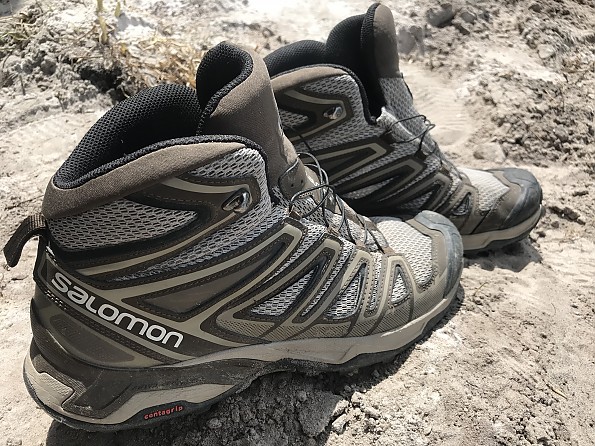 After five years and hundreds of trail miles, the Salomon X Ultra 3 Mid Aero has earned a permanent place in my hiking gear arsenal, though with clearly defined limitations that potential buyers must understand. This boot succeeds brilliantly within its intended scope while failing outside those boundaries.
The breathability advantage cannot be overstated for hikers in warm, dry climates. Having experienced the misery of sweat-soaked feet in traditional waterproof boots during desert hiking, the Aero's ventilation feels revolutionary. This single feature transforms summer hiking comfort and explains why many experienced hikers stockpile pairs despite the boot's other limitations.
The immediate comfort and zero break-in requirement addresses one of hiking's most frustrating equipment challenges. Too many hiking plans have been ruined by new boots that require weeks of painful conditioning. The Salomon X Ultra 3 Mid Aero eliminates this problem entirely, providing confident performance from the first mile.
However, this boot demands honest assessment of your hiking priorities and conditions. Hikers who frequently encounter wet weather, prefer maximum cushioning, need accommodating width, or hike primarily in muddy terrain should look elsewhere. The specialization that makes this boot excel in dry conditions creates significant limitations in other environments.
The comparison to newer models like the X Ultra 4 Mid reveals interesting trade-offs. While the X Ultra 4 offers updated aesthetics and slightly roomier fit, many users prefer the X Ultra 3's more responsive ground feel and proven durability. The choice often comes down to personal preference rather than clear superiority.
For desert hikers, summer backpackers, and anyone prioritizing breathability over complete weather protection, the Salomon X Ultra 3 Mid Aero represents an excellent choice. The combination of lightweight construction, immediate comfort, and superior warm-weather performance justifies its place among specialized hiking footwear.
My recommendation remains enthusiastic but conditional: buy these boots if breathability matters more than waterproofing, if you hike primarily in dry conditions, and if you value lightweight construction. However, ensure you have alternative footwear for wet or cold conditions, as the Aero's specialization limits its seasonal versatility.
The boot's continued popularity among experienced hikers, despite the availability of newer models, suggests that Salomon achieved something special with the X Ultra 3 Mid Aero design. It solves specific problems exceptionally well, even if it doesn't address every hiking challenge. For its intended use cases, few boots provide better performance or comfort.
After five years and hundreds of trail miles, the Salomon X Ultra 3 Mid Aero has earned a permanent place in my hiking gear arsenal, though with clearly defined limitations that potential buyers must understand. This boot succeeds brilliantly within its intended scope while failing outside those boundaries.
The breathability advantage cannot be overstated for hikers in warm, dry climates. Having experienced the misery of sweat-soaked feet in traditional waterproof boots during desert hiking, the Aero's ventilation feels revolutionary. This single feature transforms summer hiking comfort and explains why many experienced hikers stockpile pairs despite the boot's other limitations.
The immediate comfort and zero break-in requirement addresses one of hiking's most frustrating equipment challenges. Too many hiking plans have been ruined by new boots that require weeks of painful conditioning. The Salomon X Ultra 3 Mid Aero eliminates this problem entirely, providing confident performance from the first mile.
However, this boot demands honest assessment of your hiking priorities and conditions. Hikers who frequently encounter wet weather, prefer maximum cushioning, need accommodating width, or hike primarily in muddy terrain should look elsewhere. The specialization that makes this boot excel in dry conditions creates significant limitations in other environments.
The comparison to newer models like the X Ultra 4 Mid reveals interesting trade-offs. While the X Ultra 4 offers updated aesthetics and slightly roomier fit, many users prefer the X Ultra 3's more responsive ground feel and proven durability. The choice often comes down to personal preference rather than clear superiority.
For desert hikers, summer backpackers, and anyone prioritizing breathability over complete weather protection, the Salomon X Ultra 3 Mid Aero represents an excellent choice. The combination of lightweight construction, immediate comfort, and superior warm-weather performance justifies its place among specialized hiking footwear.
My recommendation remains enthusiastic but conditional: buy these boots if breathability matters more than waterproofing, if you hike primarily in dry conditions, and if you value lightweight construction. However, ensure you have alternative footwear for wet or cold conditions, as the Aero's specialization limits its seasonal versatility.
The boot's continued popularity among experienced hikers, despite the availability of newer models, suggests that Salomon achieved something special with the X Ultra 3 Mid Aero design. It solves specific problems exceptionally well, even if it doesn't address every hiking challenge. For its intended use cases, few boots provide better performance or comfort.
Ready to Experience the Difference?
Join thousands of hikers who've discovered the comfort of truly breathable hiking boots. Your feet will thank you on every warm-weather adventure.
Get Your Pair TodayFrequently Asked Questions
Are the Salomon X Ultra 3 Mid Aero boots waterproof?
No, the Salomon X Ultra 3 Mid Aero boots are intentionally not waterproof. The "Aero" designation specifically indicates breathable construction without waterproof membranes. This design prioritizes ventilation and quick drying over weather protection. The mesh upper allows airflow that keeps feet cool and comfortable in warm weather, but water can enter during stream crossings or rain. The boots dry quickly once wet, typically within 30 minutes of continued hiking. For waterproof protection, consider the standard X Ultra 3 Mid GTX model instead.
How do I choose the right size for Salomon X Ultra 3 Mid Aero?
Size up half a size from your typical athletic shoe size for the best fit. The boots run slightly small compared to American brands, and hiking boots should accommodate foot swelling during long hikes. Ensure approximately a thumbnail's width of space between your longest toe and the boot front when standing on an incline. The heel should feel secure without slippage, while the toe box should allow natural toe movement. Try boots on in the afternoon when feet are slightly swollen, wearing your typical hiking sock thickness. The narrow-to-medium width design accommodates most foot shapes, but wide-footed hikers should consider alternative models.
What's the difference between X Ultra 3 Mid Aero and X Ultra 3 Mid GTX?
The primary difference lies in weatherproofing: the GTX version includes Gore-Tex waterproof/breathable membrane while the Aero version uses breathable mesh construction. The Aero model weighs approximately 4 ounces less per pair and provides superior ventilation in warm weather. The GTX offers complete weather protection but can feel warmer and less breathable during summer hiking. Both share identical sole construction, ankle support, and overall design philosophy. Choose Aero for hot, dry conditions where breathability matters most, or GTX for variable weather conditions requiring waterproof protection. The Aero dries faster when wet but offers no moisture barrier.
How long do Salomon X Ultra 3 Mid Aero boots typically last?
With proper care and moderate use, expect 500-800 trail miles from a pair, depending on terrain and hiking style. Rocky terrain creates more wear than soft dirt trails, while individual gait patterns affect durability patterns. The Contagrip sole typically shows significant wear around 600-700 miles, though traction remains adequate beyond this point. Upper construction proves more durable than expected despite the mesh panels—most wear occurs at the toe cap and heel areas. Regular cleaning and proper storage extend lifespan, while aggressive scrambling or consistent rocky terrain reduces it. Many hikers replace boots when the sole tread depth decreases significantly rather than waiting for upper failure, typically occurring around the 600-mile mark for average users.
Can I use Salomon X Ultra 3 Mid Aero for winter hiking?
The Salomon X Ultra 3 Mid Aero has limited winter hiking capability. The breathable construction that provides summer comfort becomes a liability in cold conditions below 40°F, allowing heat loss and providing no insulation. Snow can easily enter through the mesh panels, leading to wet, cold feet. The boots work adequately for shoulder-season hiking in temperatures above 40°F with appropriate wool sock layering. For serious winter conditions, dedicated insulated boots or the insulated X Ultra Winter models provide better performance. Some users successfully use them for winter approaches in dry conditions with aggressive sock layering, but this requires careful attention to temperature and conditions. Consider them primarily three-season boots in most climates.
Are these boots suitable for backpacking with heavy packs?
The Salomon X Ultra 3 Mid Aero works well for ultralight to moderate backpacking loads up to 35-40 pounds. The lightweight construction and responsive design provide excellent performance for fast-and-light backpacking trips. However, traditional heavy loads (50+ pounds) may overwhelm the moderate cushioning and support, potentially causing discomfort during long days. The EVA midsole provides adequate support for most backpackers, but those carrying heavy loads or having previous foot problems might prefer boots with more aggressive midsole support. Day hiking and weekend trips with reasonable pack weights represent the sweet spot for these boots. Most users report excellent comfort for pack weights in the 25-35 pound range during multi-day trips.
Explore More Hiking Gear Reviews
Discover comprehensive reviews of the latest hiking boots, backpacks, and outdoor gear from our expert team.
Visit Our Gear Hub