Andrews Bald: The Ultimate Guide to Hiking the Great Smoky Mountains' Highest Grassy Bald
Experience breathtaking mountain views from Tennessee's highest grassy meadow
Having hiked Andrews Bald multiple times across different seasons, I can confidently say it's one of the most rewarding trails in Great Smoky Mountains National Park. This comprehensive guide shares everything you need to know about reaching the highest grassy bald in the Smokies, from trail conditions to essential gear. Whether you're a beginner hiker or experienced adventurer, you'll find valuable insights to make your Andrews Bald experience unforgettable. For more national park hiking guides and outdoor gear recommendations, visit Explore National Parks Store.
Introduction: Why Andrews Bald Should Be Your Next Hike

Andrews Bald stands as a crown jewel among Great Smoky Mountains National Park's hiking destinations, offering visitors the unique experience of reaching the highest grassy bald in the entire park system. At 5,920 feet above sea level, this remarkable mountain meadow provides sweeping panoramic views that stretch across the Tennessee and North Carolina landscape, making it one of the most photographed locations in the Smokies.
What makes Andrews Bald truly special isn't just its elevation, but the journey to reach it. The 3.6-mile roundtrip hike along the AllTrail-featured Forney Ridge Trail takes you through ancient spruce-fir forests, past cascading mountain streams, and up carefully constructed stone staircases that showcase the incredible trail restoration work completed by Friends of the Smokies.
During my first visit to Andrews Bald in early July, I was struck by the contrast between the dense, dark forest canopy and the sudden explosion of open sky and rolling meadows. The flame azaleas were in full bloom, painting the landscape in brilliant oranges and reds, while the distant mountain ridges created layers of blue and purple that seemed to stretch infinitely toward the horizon. It was that moment I knew this trail would become a regular pilgrimage for me.
Unlike many high-elevation hikes that require significant technical skill or extreme endurance, Andrews Bald offers accessibility without compromising on spectacular rewards. The trail improvements completed in the last decade have transformed what was once a notoriously rocky and challenging path into a well-maintained route suitable for families with older children, while still providing enough elevation gain to feel like a genuine mountain adventure.
Trail Overview and Getting There

The Andrews Bald hike begins at the Clingmans Dome parking area, located at the end of Clingmans Dome Road - the highest elevation road in Tennessee. Getting to the trailhead requires some planning, as the seven-mile Clingmans Dome Road winds through some of the most scenic mountain terrain in the park, gaining significant elevation along the way. From Gatlinburg, you'll follow US-441 south through the park for 13.2 miles until you reach the Clingmans Dome Road turnoff.
The parking situation at Clingmans Dome can be challenging, especially during peak season from May through October. The lot typically fills completely by 10 AM on weekends and holidays, so I strongly recommend arriving by 8 AM to secure parking. The National Park Service requires all vehicles parked for more than 15 minutes to display a parking tag, which can be purchased online or at any visitor center.
From the parking area, locate the Forney Ridge Trailhead on the left side of the lot, just before the visitor information center. This is distinctly different from the paved trail that leads to the Clingmans Dome observation tower. The Andrews Bald trail immediately begins descending through a series of carefully constructed stone steps and wooden walkways, a testament to the extensive trail restoration completed by the famous footwear of countless volunteers and trail crews.
The trail follows the Forney Ridge Trail for its entire 1.8-mile journey to Andrews Bald, with well-marked junctions along the way. At 0.1 miles, you'll pass the Clingmans Dome Bypass Trail junction - continue straight on Forney Ridge Trail. At approximately one mile, the Forney Creek Trail branches off to the right toward Jonas Creek - again, stay straight to continue toward Andrews Bald.
Important: Clingmans Dome Road is typically closed from December through March due to weather conditions. Check the National Park Service website for current road conditions before planning your visit.
What to Expect on the Hike
The Andrews Bald trail offers a unique hiking experience that progresses through distinct ecosystems and terrain types. The first mile descends approximately 600 feet through a high-elevation spruce-fir forest, an ecosystem that exists only above 5,500 feet in the Southern Appalachians. This ancient forest type is essentially a remnant from the last ice age, creating an almost mystical atmosphere with its towering trees and moss-covered understory.
Trail Conditions and Terrain
Thanks to the extensive Trails Forever renovation project completed between 2008-2010, the first mile of the Andrews Bald trail now features excellent infrastructure. You'll encounter well-built stone staircases using native rock, wooden walkways over wet areas, and improved drainage systems that have virtually eliminated the muddy conditions that once plagued this route. The trail surface varies from stone steps to packed earth, with occasional root systems and small rock outcroppings.
The middle section of the trail, roughly from mile 1.0 to 1.5, levels out considerably as you traverse through the mature forest. This section provides a welcome respite from the initial descent and offers opportunities to observe the diverse plant life, including wild raspberry and blackberry patches that ripen in late summer. During my August hike, I spent considerable time foraging these natural treats while enjoying the cooler temperatures under the forest canopy.
The final 0.3 miles to Andrews Bald gradually opens up as the forest thins, providing glimpses of the meadow ahead. You'll know you're approaching the bald when you see the wooden boardwalk that traverses the wettest section of the meadow, protecting both hikers and the delicate grass ecosystem from damage.
Wildlife and Natural Features
The Andrews Bald trail supports diverse wildlife populations throughout the year. Black bears are commonly sighted, particularly in late summer when they're feeding on berries. I've encountered bears twice on this trail - both times they were focused on foraging and moved away quickly when they noticed my presence. Other wildlife includes white-tailed deer, wild turkeys, and occasionally red squirrels that inhabit the spruce-fir forest.
Seasonal Highlight: From mid-June through early July, Andrews Bald showcases spectacular flame azalea blooms, with thousands of bright orange flowers creating one of the most impressive wildflower displays in the entire park.
Best Times to Visit Andrews Bald
Timing your visit to Andrews Bald can dramatically impact your experience, as this high-elevation destination offers distinct advantages and challenges throughout the hiking season. After hiking this trail in spring, summer, fall, and even early winter conditions, I've developed strong preferences for specific times of year based on weather, crowd levels, and natural features.
Spring (April-May): Wildflower Season
Spring hiking to Andrews Bald requires patience, as Clingmans Dome Road typically doesn't reopen until early April, and weather conditions can be highly variable. However, late April through May offers some of the most rewarding hiking conditions, with comfortable temperatures, fewer crowds, and emerging wildflowers. The risk of encountering snow or ice still exists at this elevation, so proper Brunt boots with good traction are essential.
Summer (June-August): Peak Bloom and Crowds
Summer represents both the best and most challenging time to hike Andrews Bald. The flame azalea bloom from mid-June through early July is absolutely spectacular, drawing photographers and nature enthusiasts from across the region. However, this popularity means parking becomes extremely difficult after 9 AM, and the trail can feel crowded, especially on weekends.
During my July visits, I've learned to start hiking by 7:30 AM to enjoy the bald in relative solitude before the crowds arrive. The early morning light on the azalea blooms is extraordinary, and you'll often encounter wildlife that retreats once more people arrive. Weather can change rapidly at this elevation, with afternoon thunderstorms being common.
Fall (September-November): Spectacular Colors
Fall might be my favorite time to hike Andrews Bald, offering the perfect balance of comfortable hiking weather, reduced crowds, and outstanding scenery. The high-elevation location means autumn colors arrive early, typically reaching peak in mid-October when the lower elevations are just beginning to change. The views from the bald encompass multiple elevation zones, creating a tapestry of colors that's impossible to capture in photographs.
Photography Tip: The best lighting for photography at Andrews Bald occurs during the golden hours - within two hours of sunrise or sunset. Morning light is generally superior due to clearer atmospheric conditions.
Essential Gear and Preparation
Proper gear selection can make the difference between an enjoyable hike and a challenging ordeal on Andrews Bald. The high elevation, variable weather, and diverse terrain require thoughtful preparation, especially considering that you'll be hiking through elevation zones that can experience dramatically different conditions within the same day.
Footwear Recommendations
Given the variety of trail surfaces from stone steps to wooden boardwalks to natural earth, proper hiking boots are essential for Andrews Bald. I've tested numerous options on this trail and consistently recommend mid-ankle hiking boots with aggressive tread patterns. The Clark shoes line offers some excellent options, though I personally prefer dedicated hiking boots for this terrain.
Columbia Men's Newton Ridge Plus II Waterproof Hiking Boot
Excellent waterproof protection with superior traction for mixed terrain. Perfect for Andrews Bald's variable conditions.
★★★★☆ 4.6/5 (3,798 reviews)
Backpack and Hydration
A lightweight day pack is sufficient for Andrews Bald, but choosing the right size and features enhances comfort significantly. I recommend a 20-25 liter pack with external water bottle pockets and a dedicated hydration bladder compartment. The elevation gain on the return journey makes proper hydration critical.
Teton Oasis Hydration Backpack
Lightweight 18L pack with 2L hydration bladder included. Perfect size for day hikes with sewn-in rain cover.
★★★★☆ 4.5/5 (4,052 reviews)
Trekking Poles and Support
While not absolutely necessary, trekking poles provide significant benefits on Andrews Bald, particularly during the descent to the meadow and especially on the return climb. The stone steps can be slippery when wet, and poles offer additional stability and reduce stress on knees and ankles. For those considering Jordan shoes for hiking, I'd strongly recommend against it - proper hiking footwear is essential for safety.
Cascade Mountain Tech Lightweight Trekking Poles
Aircraft-grade aluminum construction with quick-lock system. Includes interchangeable tips for different terrain.
★★★★☆ 4.6/5 (24,884 reviews)
Nutrition and Energy
The 3.6-mile roundtrip with 875 feet of elevation gain requires adequate fuel, especially considering the altitude. I always pack more food than seems necessary, as the mountain air and physical exertion increase appetite significantly.
CLIF BAR Energy Bars - Variety Pack
Made with organic oats, perfect for sustained energy during longer hikes. Non-GMO and plant-based protein.
★★★★★ 4.7/5 (107 reviews)
Honey Stinger Organic Honey Waffles
Perfect quick-energy snack for hiking. Organic honey provides natural fuel that's easy to digest on the trail.
★★★★☆ 4.6/5 (19,118 reviews)
My Personal Experience Hiking Andrews Bald
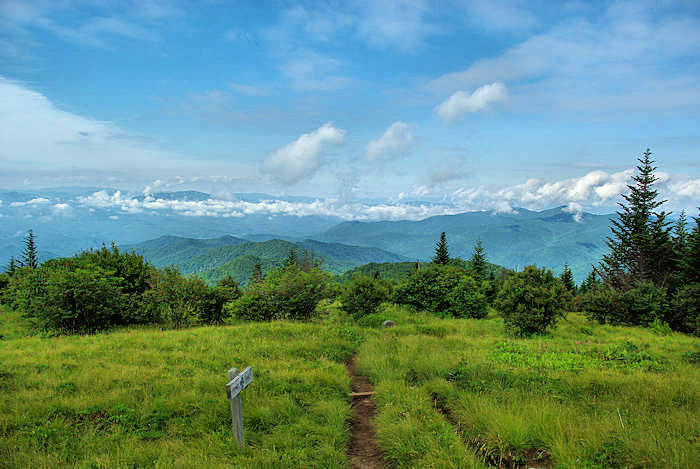
I've hiked Andrews Bald seven times over the past three years, and each visit has offered something unique and memorable. My first experience was in late June during peak flame azalea season, and I'll admit I was completely unprepared for both the beauty and the physical challenge. Despite reading that it was a "moderate" hike, the elevation and the return climb tested my fitness more than expected.
What struck me most about that first visit was the dramatic ecosystem transition. Starting in the dense, almost temperate rainforest atmosphere of the spruce-fir forest, with its moss-covered rocks and mysterious fog drifting through the trees, then emerging into the bright, open meadow felt like traveling through multiple worlds in less than two miles. The contrast was so dramatic that I spent nearly an hour just at the edge of the bald, looking back at the dark forest and ahead at the sweeping mountain views.
Lessons Learned
My biggest mistake on that first hike was underestimating the weather variability. I started hiking in shorts and a t-shirt from the parking area, where it was 75°F and sunny. By the time I reached Andrews Bald, clouds had rolled in, the temperature had dropped to the low 60s, and a light drizzle had begun. Without proper layers, I cut my time at the bald short, missing the opportunity to fully explore the meadow.
This experience taught me to always pack layers, even on seemingly perfect days. Now I never hike Andrews Bald without a lightweight rain jacket, extra insulation, and backup socks. The mountain weather can change incredibly quickly at this elevation, and being prepared allows you to enjoy the destination regardless of conditions.
Seasonal Variations
My October visit to Andrews Bald was completely different but equally spectacular. The flame azaleas were long past bloom, but the entire landscape had transformed into a tapestry of autumn colors. What I hadn't expected was how much more wildlife I'd encounter during fall. I saw three different groups of deer, numerous birds, and even caught a glimpse of what I believe was a black bear at a distance, though it moved away before I could be certain.
The fall visit also highlighted why many consider Andrews Bald among the premier hiking destinations comparable to Colorado's Manitou Incline for accessibility combined with spectacular payoff. The 360-degree views from the meadow encompass multiple mountain ranges, each showing different stages of autumn progression based on elevation.
User Reviews from Fellow Hikers
"Absolutely worth every stair for the views! It rained so we didn't get the full vista experience, but the hike through the forest was beautiful. The wooden steps and boardwalks make this so much more accessible than it used to be."
- Sarah M., AllTrails Review
"Did this hike with my family in early July and caught the azalea bloom at peak. Even my 12-year-old managed the entire hike, though we took several breaks on the way back up. The views from the bald are incredible - you can see Fontana Lake on clear days."
- Mike T., Reddit r/hiking
"The trail conditions have improved dramatically over the years. What used to be a muddy, rocky scramble is now a well-maintained path with proper drainage. Still challenging enough to feel like an accomplishment, but accessible for most fitness levels."
- Jennifer L., TripAdvisor
Pros and Cons
Pros: Spectacular panoramic views, well-maintained trail with excellent infrastructure, accessible for most fitness levels, diverse ecosystems, peak wildflower blooms, relatively short distance for the payoff, good signage and trail markers.
Cons: Extremely crowded parking during peak season, weather can change rapidly, significant elevation gain on return trip, limited cell phone coverage, trail can be slippery when wet, seasonal road closures limit access.
Frequently Asked Questions
How difficult is the Andrews Bald hike?
Andrews Bald is rated as moderate difficulty, covering 3.6 miles roundtrip with 875 feet of elevation gain. The trail begins with a descent through well-constructed stone steps and wooden walkways, making the outbound journey relatively easy. However, the return trip involves a steady uphill climb that can be challenging, especially at this high elevation where oxygen levels are reduced. Most hikers in reasonable physical condition can complete the trail in 2-3 hours, but the altitude may require more frequent rest breaks than expected. The trail improvements completed by Friends of the Smokies have made this hike significantly more accessible than it was previously, with proper drainage and stable walking surfaces throughout most of the route.
What is the best time of year to hike Andrews Bald?
The optimal time for hiking Andrews Bald depends on your priorities and hiking experience. For wildflower enthusiasts, mid-June through early July offers spectacular flame azalea blooms that create one of the most impressive floral displays in the park. Fall provides excellent hiking conditions with comfortable temperatures and outstanding autumn colors, typically peaking in mid-October. Spring can be rewarding but unpredictable, with possible snow or ice conditions even into April. Summer offers the most reliable weather and longest daylight hours but also brings the largest crowds and highest temperatures. I personally prefer early fall for the combination of pleasant hiking conditions, moderate crowds, and exceptional scenery. Regardless of season, starting your hike early morning provides the best experience with cooler temperatures, better lighting, and fewer crowds.
Do I need special permits or reservations for Andrews Bald?
No special permits are required to hike Andrews Bald, as it's accessed entirely within Great Smoky Mountains National Park's day-use areas. However, you must purchase a parking tag if you plan to park for more than 15 minutes at the Clingmans Dome parking area. These tags can be purchased online in advance or at any park visitor center, with options for daily, weekly, or annual passes. The parking tag requirement was implemented to help manage the extremely high visitation at this popular destination. Additionally, while permits aren't required, I strongly recommend checking road conditions before your visit, as Clingmans Dome Road is typically closed from December through March due to weather conditions. The National Park Service website provides current road status and weather conditions for planning purposes.
Can families with children hike Andrews Bald?
Andrews Bald is suitable for families with children, but several factors should be considered when planning a family hike. Children should be comfortable hiking approximately 4 miles total distance and capable of handling sustained uphill hiking for the return journey. The trail improvements have made the route much safer and more accessible, with well-constructed steps and walkways eliminating most of the hazardous sections. However, the elevation and physical demands mean this hike is better suited for children aged 8 and older who have some hiking experience. Families should plan for 3-4 hours total time, including breaks and time to explore the meadow. Proper footwear is essential for children, as the mix of stone steps, wooden walkways, and natural terrain requires good traction. Consider bringing moon boots or similar supportive footwear depending on weather conditions.
What wildlife might I encounter on Andrews Bald?
The Andrews Bald trail supports diverse wildlife populations throughout the hiking season, with black bears being the most significant safety consideration. Bears are commonly sighted, particularly during late summer when they're actively feeding on berries along the trail. While encounters are generally safe if you maintain proper distance and make noise while hiking, carrying bear spray is recommended. Other wildlife includes white-tailed deer, wild turkeys, various songbirds, and occasionally red squirrels in the spruce-fir forest sections. The meadow itself attracts butterflies and other pollinators during wildflower season. Wildlife activity is highest during early morning and late afternoon hours, so starting your hike early increases your chances of sightings. Always follow National Park Service guidelines for wildlife encounters: maintain at least 150 feet from bears and 25 feet from all other wildlife, never feed animals, and secure all food items properly.
Are dogs allowed on the Andrews Bald trail?
No, dogs are not permitted on the Andrews Bald trail or anywhere else in Great Smoky Mountains National Park except for designated areas along the Gatlinburg Trail and Oconaluftee River Trail. This restriction exists to protect both wildlife and domestic animals, as the park's ecosystem includes predators like black bears and coyotes that can pose threats to pets. Additionally, dogs can disturb wildlife and damage sensitive plant communities, particularly in the delicate grassy bald ecosystem that requires active management to prevent forest encroachment. The park's pet restrictions are strictly enforced with significant fines for violations. If you're traveling with pets, consider exploring Tecovas boots and other gear suitable for pet-friendly hiking areas outside the national park boundaries, where numerous trails welcome dogs with proper leash control.
Conclusion
Andrews Bald represents everything that makes Great Smoky Mountains National Park special: accessible natural beauty, diverse ecosystems, rich history, and the reward that comes from earning spectacular views through your own effort. This 3.6-mile roundtrip hike offers an experience that appeals to both casual hikers seeking beautiful mountain scenery and serious outdoor enthusiasts looking for a challenging workout at high elevation.
The trail's transformation through the Trails Forever project has made Andrews Bald more accessible than ever before, while still maintaining the sense of adventure and accomplishment that comes from reaching the highest grassy bald in the park. Whether you're drawn by the spectacular flame azalea blooms of early summer, the vibrant autumn colors of October, or simply the year-round appeal of panoramic mountain views, Andrews Bald delivers an experience that will create lasting memories.
As you plan your visit, remember that proper preparation makes all the difference. Start early to avoid crowds and secure parking, dress in layers to accommodate changing weather conditions, bring plenty of water and snacks, and most importantly, take time to truly appreciate the natural beauty around you. The hike to Andrews Bald isn't just about reaching a destination - it's about experiencing one of the most spectacular ecosystems in the eastern United States.
For hikers looking to expand their Smoky Mountains adventures, Andrews Bald pairs well with other high-elevation hikes in the park, and the skills you develop here will prepare you for more challenging trails throughout the region. Consider exploring similar Thursday boots and gear recommendations for your next hiking adventure.
Ready to Hike Andrews Bald?
Get the latest trail conditions, weather updates, and hiking tips for your adventure!
Visit Our Store Check Trail Conditions