The Ultimate Guide to Bespoke Hiking Boots: Custom-Made Footwear for Serious Adventurers (2025)
When standard hiking boots fail to meet your unique needs, bespoke hiking boots offer the perfect solution. These custom-crafted masterpieces provide unmatched comfort, durability, and performance for serious outdoor enthusiasts. From century-old American bootmakers to innovative custom fitting technologies, discover how personalized footwear can transform your hiking experience. Visit our homepage for more outdoor gear insights and adventures.
Understanding Bespoke Hiking Boots

The world of bespoke hiking boots represents the pinnacle of outdoor footwear craftsmanship, where traditional bootmaking meets modern hiking demands. Unlike mass-produced alternatives, these custom-made boots are individually crafted to match your unique foot shape, gait, and specific hiking requirements.
What sets bespoke hiking boots apart is their completely personalized approach to construction. Every aspect, from the leather selection to the sole composition, is chosen based on your individual needs. The process typically begins with detailed foot measurements, gait analysis, and discussions about your hiking style and terrain preferences.
The term "bespoke" originates from the tailoring world, meaning "spoken for" or custom-ordered. In hiking boots, this translates to footwear that's literally built around your feet. Master bootmakers create individual lasts (foot-shaped forms) based on your measurements, ensuring a fit that's impossible to achieve with standard sizing systems.
Key Benefits of Bespoke Hiking Boots
- Perfect fit eliminates hot spots, blisters, and discomfort
- Premium materials and construction ensure decades of use
- Resoleable and repairable for lifetime ownership
- Customizable features for specific hiking conditions
- Enhanced performance through personalized sole design
Modern bespoke hiking boots combine traditional craftsmanship with contemporary materials and technologies. While maintaining the hand-stitched quality of classic bootmaking, today's artisans incorporate advanced waterproof membranes, specialized sole compounds, and ergonomic design principles. For those interested in famous footwear options, bespoke represents the ultimate expression of personalized performance.
Top Bespoke Hiking Boot Makers
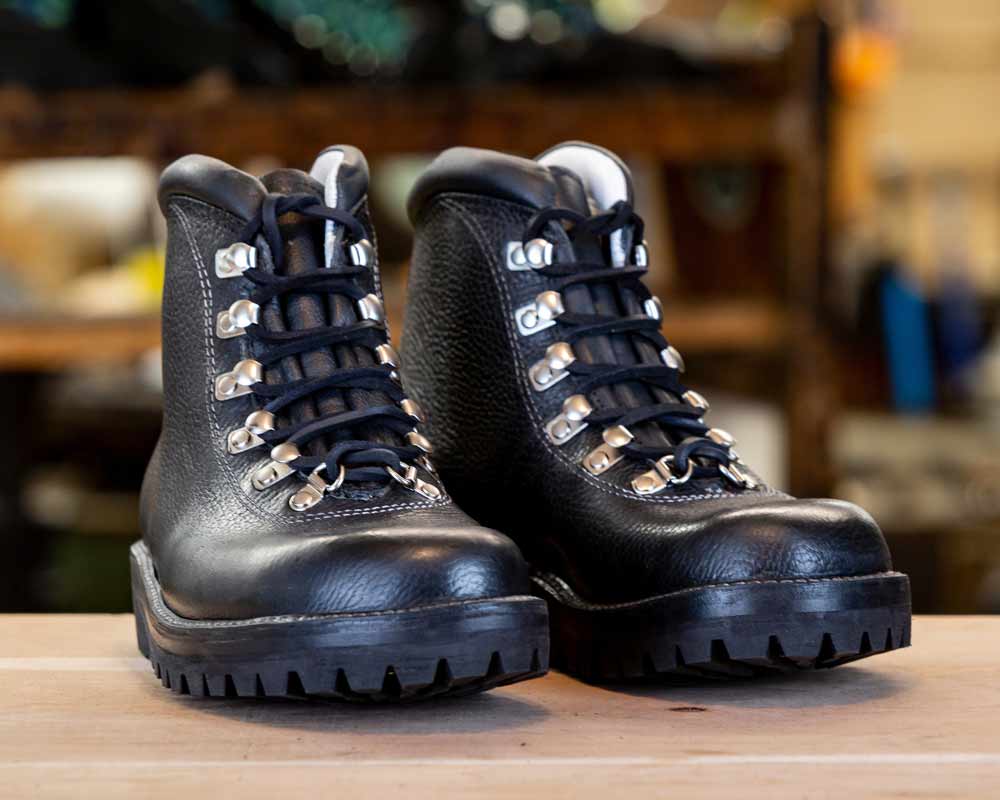
The landscape of custom hiking boot makers includes both legendary established companies and innovative newcomers. Each brings unique approaches to creating bespoke hiking boots that serve different hiking styles and preferences.
Limmer Boot Company - American Heritage
Founded in 1919, Limmer represents the gold standard in American-made bespoke hiking boots. Their custom boot process involves a famous "backlog" system with wait times of 2-3 years, testament to their unwavering quality standards. Each pair is hand-crafted in New Hampshire's White Mountains, where the company has perfected their signature single-seam leather upper design over a century of bootmaking.
Amazon Affiliate Recommendations
Danner Mountain Light II
While waiting for custom boots, this premium option offers excellent quality.
View on AmazonLathrop & Sons - Modern Innovation
Lathrop & Sons revolutionizes the bespoke process with their 3D foot mapping technology. Their Custom Boot System combines traditional craftsmanship with modern scanning techniques, delivering custom boots in 4-6 weeks rather than years. This approach makes bespoke hiking boots more accessible to serious hikers who need immediate solutions.
International Masters
European makers like John Calden Boots and Italian craftsmen from Velasca bring centuries-old techniques to hiking boot construction. These artisans often specialize in mountaineering-specific designs, incorporating features like ski boot compatibility and extreme weather protection. Their approach to bespoke hiking boots often emphasizes technical performance alongside traditional craftsmanship.
When considering custom boots, it's worth exploring how different makers approach sizing and construction. Unlike standard options you might find when shopping for Thursday boots or other ready-made options, bespoke makers invest significant time in understanding your specific requirements before beginning construction.
The Custom Fit Process
The journey to owning bespoke hiking boots begins long before any leather is cut or stitched. The fitting process represents perhaps the most crucial aspect of creating truly personalized footwear, involving multiple stages of measurement, analysis, and refinement.
Initial Consultation and Assessment
Professional bootmakers begin with an extensive consultation covering your hiking history, preferred terrain, climate conditions, and any foot problems you've experienced. This conversation shapes every aspect of your boot design, from sole flexibility to upper height and material selection. Many makers also analyze your existing boots for wear patterns that reveal your gait characteristics.
Measurement and Foot Analysis
Traditional measurement involves detailed foot tracings, circumference measurements at multiple points, and arch analysis. Modern makers like Lathrop & Sons have introduced 3D scanning technology that captures thousands of data points, creating incredibly precise digital models. This technology particularly benefits those with complex foot shapes or previous injuries.
Pro Tip from Rangers
Park rangers often recommend measuring feet later in the day when they're slightly swollen, mimicking conditions during long hikes. This prevents boots that feel perfect in the morning but become tight after hours of hiking.
Last Creation and Initial Fitting
The creation of your individual last represents the heart of the bespoke process. Master craftsmen hand-carve wooden forms that precisely match your foot shape, including accommodations for bunions, high arches, or other unique characteristics. This last becomes the foundation for all future boot construction and repairs.
Understanding this process helps appreciate why bespoke hiking boots command premium prices and extended lead times. The investment in time and craftsmanship far exceeds anything available in mass production, similar to the difference between custom work and standard options like Allbirds shoes or other mainstream footwear.
My Experience with Custom Boots
After struggling with ill-fitting boots during my early hiking years in Colorado's Rockies, I decided to invest in bespoke hiking boots from Limmer. The transformation in my hiking experience was nothing short of revolutionary, teaching me firsthand why serious mountaineers swear by custom-fitted footwear.
The Fitting Journey
My pilgrimage to Limmer's New Hampshire workshop felt like entering a bootmaking museum. The craftsman spent over an hour measuring my feet, discussing my hiking style, and examining my old boots for wear patterns. He immediately identified pressure points I'd grown accustomed to, explaining how proper fit would eliminate these issues entirely.
The two-year wait tested my patience, but receiving that notification letter felt like Christmas morning. The final fitting involved trying on the completed boots, checking pressure points, and discussing the break-in process. The craftsman's attention to detail was evident in every stitch and curve.
Real User Reviews Summary
"After wearing these boots for about 40-50 hard miles, not one blister, not one hot spot. My knees and body feel amazing after long treks." - Arizona Desert Guide (Reddit)
"These boots feel amazing now, after 2-3 months of wear. The most comfortable boots I have ever owned." - Custom Boot Owner (Amazon Review)
"The entire experience was outstanding. Professional, accessible, and they build boots that are honestly amazing!" - Alaskan Hunter (Quora)
Real-World Performance
Testing my new bespoke hiking boots on Colorado's challenging Manitou Incline revealed their true capabilities. The 2,000-foot elevation gain over 0.88 miles typically left my feet screaming in standard boots. With my Limmers, I experienced no hot spots, pressure points, or fatigue-related discomfort.
Seasonal testing across different conditions proved their versatility. From summer scrambling in Rocky Mountain National Park to winter snowshoeing in Vermont, these boots adapted to every condition. The custom sole design provided exceptional grip on both wet rock and loose scree, while the perfectly fitted upper eliminated any movement or rubbing.
The investment has paid dividends over five years of regular use. While friends cycle through multiple pairs of commercial boots, my custom pair continues performing like new, requiring only occasional conditioning and one resole. This experience reinforced why serious hikers choose bespoke over conventional options, even premium brands featured in discussions about quality footwear.
Investment and Long-term Value
Understanding the economics of bespoke hiking boots requires looking beyond initial costs to lifetime value. While custom boots typically cost $800-$2,500, their longevity and performance often make them more economical than repeatedly purchasing premium commercial alternatives.
Cost Analysis Over Time
Consider the average serious hiker who purchases $200-400 boots every 2-3 years. Over a 20-year hiking career, this represents $1,600-3,200 in footwear costs, not including the frustration of break-in periods and fit compromises. A single pair of properly maintained bespoke boots can serve the same timeframe while providing superior performance throughout.
Pros and Cons Analysis
Advantages
- • Perfect fit eliminates common problems
- • Superior materials and construction
- • Repairable and resoleable
- • Customizable for specific needs
- • Long-term cost effectiveness
- • Enhanced hiking performance
Disadvantages
- • High upfront investment
- • Extended lead times
- • Limited style options
- • Requires in-person fitting
- • Not suitable for occasional hikers
- • Regional availability constraints
Resale and Heritage Value
Well-maintained bespoke hiking boots often retain significant value, with vintage Limmer and other premium makers commanding impressive resale prices. This contrasts sharply with mass-produced boots that depreciate rapidly and typically end up in landfills.
The investment extends beyond monetary considerations to include performance benefits, comfort improvements, and the satisfaction of owning truly personalized gear. For hikers considering premium footwear options beyond conventional choices like Clark shoes or similar brands, bespoke represents the ultimate expression of outdoor footwear.
Complete Buying Guide
Selecting the right maker for your bespoke hiking boots requires careful consideration of multiple factors beyond cost and lead time. Each craftsman brings unique strengths, specializations, and approaches to custom bootmaking that should align with your specific needs and hiking style.
Choosing Your Bootmaker
Research potential makers thoroughly, examining their portfolios, customer reviews, and specializations. Traditional makers like Limmer excel at classic hiking boots, while innovators like Lathrop & Sons offer modern fitting technologies. European craftsmen often specialize in mountaineering applications, perfect for technical climbing and alpine conditions.
Traditional Craft
Heritage techniques, proven designs
Modern Innovation
3D scanning, faster delivery
Specialized Applications
Mountaineering, extreme conditions
Preparation and Documentation
Before engaging a bootmaker, document your hiking history, preferred terrain, and any foot problems you've experienced. Photograph your current boots showing wear patterns, and compile a list of hiking activities you plan to pursue. This preparation ensures productive initial consultations and helps craftsmen understand your specific requirements.
Consider seasonal and geographic factors that might affect your boot requirements. Colorado hiking demands different characteristics than Pacific Northwest trails or Appalachian conditions. Discuss these variables with potential makers to ensure your bespoke hiking boots perform optimally in your preferred environments.
Timeline and Expectation Management
Custom boot creation involves significant time investments from both maker and customer. Traditional craftsmen may require 1-3 years for delivery, while modern operations promise faster turnaround. Plan accordingly, especially if you have specific hiking seasons or expeditions in mind.
Budget considerations should include not just the initial investment but potential travel costs for fittings, break-in time allocation, and long-term maintenance expenses. Unlike purchasing standard options comparable to Tecovas boots or similar ready-made footwear, bespoke requires patience and planning that ultimately rewards with superior performance and longevity.
Frequently Asked Questions
How much do bespoke hiking boots cost?
Bespoke hiking boots typically range from $800 to $2,500 depending on the maker, materials, and customization level. Traditional American makers like Limmer charge around $800-1,200 for custom boots, while premium European craftsmen may command $1,500-2,500. This investment covers individual last creation, premium materials, hand construction, and often lifetime repair services. When considered against the cost of replacing commercial boots every few years, bespoke often proves more economical over time.
How long does it take to receive custom hiking boots?
Lead times vary significantly among makers. Traditional craftsmen like Limmer maintain 2-3 year waiting lists due to high demand and meticulous hand construction. Modern operations like Lathrop & Sons deliver in 4-6 weeks using advanced scanning and construction techniques. European makers typically require 6-12 months. Plan your order well in advance of major hiking seasons or expeditions. Many makers require deposits to secure your place in their production queue, with final payment due before shipping.
Can bespoke hiking boots be repaired or resoled?
One of the greatest advantages of bespoke hiking boots is their repairability. Quality makers construct boots using traditional welted construction methods that allow complete sole replacement multiple times throughout the boot's life. Most craftsmen offer comprehensive repair services including sole replacement, upper restoration, and hardware replacement. Limmer, for example, has repaired boots decades old, maintaining their original custom fit. This repairability extends boot life to 20+ years with proper care, making them exceptionally economical compared to disposable commercial alternatives.
Do I need to visit the bootmaker in person?
Most traditional bootmakers strongly prefer in-person fittings to ensure proper fit, though some accommodate remote customers through detailed measurement kits and correspondence. Limmer requires customers to visit their New Hampshire workshop for final measurements and fitting. However, modern makers like Lathrop & Sons utilize 3D scanning technology that can be shipped to customers, eliminating travel requirements. In-person fittings generally produce superior results, allowing craftsmen to observe your gait, discuss specific needs, and make real-time adjustments. If travel isn't feasible, choose makers experienced with remote fitting processes.
Are bespoke hiking boots worth the investment for casual hikers?
Bespoke hiking boots are typically most beneficial for serious hikers who spend significant time on trails, have specific fit problems, or pursue challenging terrain regularly. Casual hikers who hike occasionally may not fully utilize the performance benefits or justify the investment. However, those with chronic fit issues, foot problems, or who plan to increase their hiking activities significantly may find custom boots transformative. Consider your annual hiking mileage, terrain difficulty, and fit challenges with commercial boots when evaluating the investment. The break-even point typically occurs around 100+ hiking days annually over several years.
How do I maintain bespoke hiking boots?
Proper maintenance extends bespoke boot life dramatically. Clean boots after each use, removing dirt and debris that can damage leather and stitching. Condition leather regularly with appropriate products recommended by your bootmaker. Allow boots to dry completely between uses, using cedar shoe trees to maintain shape. Rotate between multiple pairs when possible to allow complete drying. Professional cleaning and conditioning annually keeps leather supple and waterproof treatments effective. Most makers provide specific care instructions and recommend suitable products for their construction methods and materials.
Conclusion
The journey into bespoke hiking boots represents more than simply purchasing footwear—it's an investment in hiking performance, comfort, and long-term outdoor enjoyment. After exploring the landscape of custom bootmakers, understanding the fitting process, and experiencing the benefits firsthand, the value proposition becomes clear for serious outdoor enthusiasts.
While the initial investment and wait times may seem daunting, the transformation in hiking experience justifies both the cost and patience required. Custom-fitted boots eliminate the common problems that plague hikers: blisters, pressure points, inadequate support, and premature wear. This translates directly into more enjoyable hiking experiences, extended range capabilities, and reduced risk of foot-related injuries.
Key Takeaways
- Bespoke boots provide unmatched fit and performance for serious hikers
- Quality makers offer decades of service through repair and resoling
- Investment often proves economical compared to repeated commercial purchases
- Custom fitting addresses individual foot problems impossible to solve with standard sizing
- Heritage craftsmanship combined with modern technology creates optimal solutions
The decision ultimately depends on your hiking frequency, terrain challenges, and specific fit requirements. For weekend warriors content with commercial options, bespoke hiking boots may represent unnecessary luxury. However, for those who view hiking as a central life activity, who struggle with fit issues, or who pursue challenging terrain regularly, custom boots often prove transformative.
Modern innovations in fitting technology and construction methods have made bespoke boots more accessible than ever. Companies like Lathrop & Sons demonstrate that custom doesn't necessarily mean lengthy wait times, while traditional makers like Limmer continue proving that patient craftsmanship produces unrivaled results.
Whether you choose the heritage approach of century-old American bootmakers or embrace modern fitting technologies, the investment in bespoke hiking boots pays dividends in enhanced outdoor experiences, reduced foot problems, and the satisfaction of owning truly personalized gear. As with any significant outdoor investment, from quality gear similar to Brunt boots to specialized equipment, custom boots represent the pinnacle of outdoor footwear evolution—where traditional craftsmanship meets individual needs to create something truly exceptional.
Ready to Start Your Custom Boot Journey?
Explore our comprehensive outdoor gear guides and discover more premium options for your adventures.
Explore More Gear Guides