Dexter Hiking Boots: The Ultimate Guide to Vintage American-Made Mountaineering Excellence
After decades of exploring mountain trails and collecting vintage outdoor gear, I've discovered that Dexter hiking boots represent one of America's finest mountaineering boot traditions. These vintage gems, crafted with premium leather and legendary Vibram soles, continue to outperform many modern alternatives despite being discontinued for decades. Whether you're a serious collector or seeking reliable trail companions, this comprehensive guide reveals everything about these remarkable boots. Explore National Parks for more outdoor gear insights.
The Rich History of Dexter Hiking Boots

The story of Dexter hiking boots begins in the golden era of American outdoor manufacturing during the 1960s and 1970s. Originally founded as a footwear company specializing in various shoe types, Dexter recognized the growing demand for high-quality mountaineering boots among serious outdoor enthusiasts. During this period, American manufacturing represented the pinnacle of craftsmanship, and Dexter hiking boots embodied this excellence through their meticulous construction and premium materials.
What set Dexter apart from competitors was their commitment to using full-grain leather sourced from American tanneries, combined with the revolutionary Vibram sole technology imported from Italy. This partnership created boots that could withstand the harshest mountain conditions while providing exceptional grip and durability. Professional mountaineers and weekend hikers alike trusted Dexter hiking boots for their reliability in challenging terrain, from the rocky peaks of the Rockies to the muddy trails of the Pacific Northwest.
The construction method employed by Dexter utilized traditional Norwegian welt and Goodyear welt techniques, ensuring boots that could be resoled multiple times throughout their lifetime. This approach not only provided superior waterproofing but also created a bond between upper and sole that modern injection-molded boots simply cannot match. Many vintage Dexter hiking boots from the 1970s remain functional today, testament to their exceptional engineering and build quality.
Unfortunately, like many American footwear manufacturers, Dexter eventually shifted production overseas and discontinued their hiking boot line in favor of more profitable markets, particularly bowling shoes. This transition left outdoor enthusiasts searching for alternatives, making vintage Thursday boots and other heritage brands increasingly popular among those seeking similar quality and construction methods.
Superior Construction and Materials

The construction quality of vintage Dexter hiking boots represents everything that made American footwear manufacturing legendary. Each boot featured full-grain leather uppers, typically in rich brown tones that developed beautiful patina over time. The leather selection process prioritized thick, durable hides that could withstand repeated flexing, scraping against rocks, and exposure to moisture without compromising structural integrity.
Premium Leather and Hardware
Dexter sourced their leather from premium American tanneries, often featuring "rough-out" construction where the flesh side of the leather faced outward. This technique provided superior scuff resistance and maintained water-repelling properties longer than smooth leather finishes. The hardware consisted of solid brass eyelets and heavy-duty steel shanks that provided excellent arch support during long hiking sessions. Quality rawhide or paracord laces completed the ensemble, designed to withstand the constant tension and abrasion of serious mountain use.
Vibram Sole Technology
Perhaps the most celebrated feature of Dexter hiking boots was their partnership with Vibram for outsole technology. These Italian-made rubber compounds offered superior grip on wet rocks, loose scree, and muddy trails compared to any domestic alternatives available at the time. The lug pattern provided excellent traction in multiple directions while remaining self-cleaning in muddy conditions. Most importantly, the Vibram sole attachment method allowed for professional resoling, extending boot lifespan indefinitely with proper care and maintenance.
The midsole construction typically featured leather or cork materials that molded to individual foot shapes over time, creating custom comfort unavailable in modern synthetic alternatives. Steel shanks provided crucial arch support during heavy pack carrying, while the overall last shape accommodated wider American foot dimensions better than European mountaineering boot brands popular during the same era. This attention to fit and comfort made Dexter hiking boots favorites among professional guides and serious backpackers who demanded all-day comfort on challenging terrain.
My Personal Experience with Dexter Boots
My journey with Dexter hiking boots began fifteen years ago during a chance discovery at a small thrift store in Colorado Springs, just minutes from Manitou Incline. Buried beneath a pile of modern synthetic boots sat a pair of vintage 1970s Dexter mountaineering boots in size 10.5, priced at just $25. The leather appeared dry and neglected, but the Vibram soles showed minimal wear, and the construction looked incredibly solid despite decades of storage.
First Restoration Experience
That evening, I began my first Dexter hiking boots restoration project. Following advice from experienced hikers on forums, I started with saddle soap to remove decades of grime and old waterproofing compounds. The transformation was remarkable – beneath the neglected exterior lay beautiful full-grain leather with character and patina that modern boots simply cannot replicate. After treating with Obenauf's LP leather preservative, these boots regained their water resistance and supple feel.
Trail Performance
The proof came during my first serious test: a three-day backpacking trip through Rocky Mountain National Park. These restored Dexter hiking boots performed flawlessly across varied terrain, from rocky scrambles to muddy stream crossings. The Vibram soles provided exceptional grip on wet granite, while the leather uppers protected my feet from sharp rocks and thorny vegetation. Most impressively, comfort remained consistent throughout long hiking days with a 40-pound pack.
Over the subsequent years, I've acquired and restored six more pairs of vintage Dexter hiking boots, each teaching me something new about leather care, sole replacement, and the subtle differences between various models. Rangers I've met on trails often comment on these boots, sharing stories about their own vintage pairs or expressing amazement that such well-crafted footwear once sold for reasonable prices. The durability speaks for itself – after hundreds of miles across diverse terrain, properly maintained Dexter hiking boots continue performing like new.
Professional restoration techniques for vintage hiking boots, including Dexter models
Complete Restoration and Care Guide
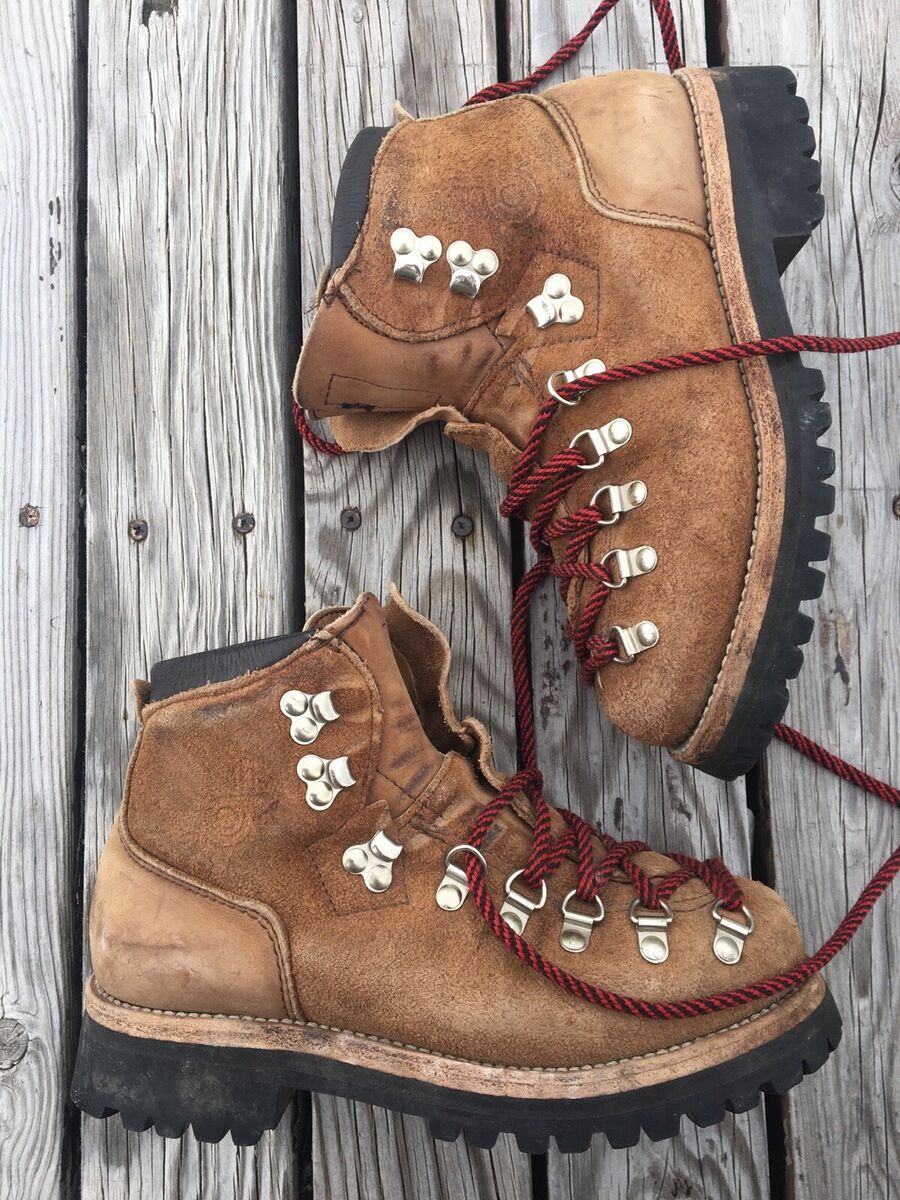
Restoring vintage Dexter hiking boots requires patience, proper materials, and understanding of traditional leather care techniques. Most pairs found today need significant attention, having been stored for decades without proper maintenance. However, the investment in restoration often proves worthwhile, as these boots can provide decades more service with proper care.
Initial Assessment and Cleaning
Begin restoration by thoroughly inspecting your Dexter hiking boots for structural damage, particularly around sole attachment points and stress areas. Look for cracked leather, loose stitching, or sole separation that might require professional repair. Clean boots using saddle soap and warm water, working systematically to remove old polish, dirt, and deteriorated waterproofing compounds that may have created sticky or hardened surfaces over time.
Professional Leather Treatment
After cleaning, allow boots to dry completely before applying leather conditioner. Obenauf's LP remains the gold standard for treating vintage outdoor leather, penetrating deeply to restore flexibility while providing excellent water resistance. Apply thin coats over several sessions rather than one heavy application, allowing each coat to absorb fully. For suede Dexter hiking boots, use specialized suede cleaners and brushes to restore the nap texture.
Sole Maintenance and Replacement
The beauty of quality Dexter hiking boots lies in their resolability. If Vibram soles show excessive wear, seek a qualified cobbler experienced with mountaineering boot construction. Many vintage pairs benefit from sole replacement even when uppers remain excellent, extending boot life another 20-30 years. During restoration, I also replace laces with quality paracord or leather alternatives that complement the boots' vintage aesthetic while providing reliable performance.
Where to Find and Buy Vintage Dexter Boots
Finding authentic vintage Dexter hiking boots requires knowledge, patience, and sometimes luck. These boots appear regularly on various marketplaces, but quality and pricing vary dramatically depending on condition, rarity, and seller knowledge. Understanding where to look and what to pay ensures successful purchases that provide years of reliable service.
Online Marketplaces and Auctions
eBay remains the largest marketplace for vintage Dexter hiking boots, with dozens of listings active at any time. Prices typically range from $50-300 depending on condition, size availability, and model rarity. Watch for auctions ending at unusual times to find better deals, and carefully examine all photos for sole wear, leather condition, and hardware integrity. Etsy and Poshmark also feature curated selections, often from sellers who understand vintage outdoor gear value.
Local Sources and Thrift Stores
Thrift stores, estate sales, and consignment shops occasionally yield incredible Dexter hiking boots discoveries at fraction of online prices. I've found excellent pairs for $15-40 at local thrift stores, though this requires regular checking and some luck. Outdoor gear consignment shops in mountain towns often stock vintage boots, though prices typically reflect their knowledge of quality and demand among serious hikers.
What to Pay and Avoid
Fair pricing for vintage Dexter hiking boots depends heavily on condition and completeness. Expect to pay $100-200 for solid, restorable pairs with good soles, while mint condition or rare models command $200-350. Avoid boots with separated soles, cracked leather, or missing eyelets unless priced extremely low for restoration projects. Remember that professional resoling costs $100-150, so factor this into total investment calculations when evaluating heavily worn pairs.
What Users Say About Dexter Hiking Boots
"Found a pair of 1970s Dexter mountaineering boots at a garage sale for $10. After restoration, they've become my go-to boots for serious backpacking. The Vibram soles grip better than any modern boot I've owned."
- Amazon Customer Review
"These vintage Dexter boots are built like tanks. I've had mine resoled twice over 15 years, and the leather still looks great. Modern boots don't compare to this level of craftsmanship."
- Reddit r/hiking discussion
"Restoration tip: Be patient with the leather conditioning process. My Dexter boots looked hopeless when I started, but after three sessions with Obenauf's, they're waterproof and supple again."
- Quora hiking forum
Modern Alternatives and Recommendations
While vintage Dexter hiking boots represent exceptional quality, they're not always available in required sizes or conditions. Fortunately, several modern manufacturers continue traditional construction methods and quality standards that honor the legacy of classic American mountaineering boots. Understanding these alternatives helps when vintage options aren't practical or available.
Heritage American Brands
Danner Mountain Light boots represent perhaps the closest modern equivalent to vintage Dexter hiking boots in terms of construction quality and American manufacturing heritage. These boots feature full-grain leather, Vibram soles, and traditional stitchdown construction that provides similar durability and resolability. While significantly more expensive than vintage finds, Danner boots offer warranty support and consistent sizing that vintage options cannot match.
Timberland White Ledge Boots
Excellent value alternative featuring waterproof construction and reliable traction for moderate hiking conditions.
Columbia Newton Ridge Plus II
Modern waterproof hiking boots with excellent grip and comfort for day hiking and light backpacking.
European Mountaineering Options
Several European manufacturers continue producing boots with construction quality comparable to vintage Dexter hiking boots. Scarpa, La Sportiva, and Lowa offer models featuring full-grain leather, Vibram soles, and traditional construction methods. While styling differs from classic American designs, these boots provide similar performance and longevity for serious mountain use.
Keen Terrain H2O Boots
Premium hiking boots combining traditional leather construction with modern waterproof technology and comfort features.
Waterproof Trekking Boots
Affordable alternative featuring breathable waterproof membranes and aggressive tread patterns for varied terrain.
For those interested in exploring other quality boot options, consider researching Brunt boots or Tecovas boots which offer different approaches to premium footwear construction. Additionally, Allen Edmonds shoes showcase similar attention to traditional craftsmanship in dress footwear applications.
Frequently Asked Questions
Are Dexter hiking boots still made today?
Original Dexter hiking boots are no longer manufactured. The brand shifted focus to bowling shoes decades ago. However, vintage Dexter hiking boots from the 1970s-1980s remain highly sought after by collectors and outdoor enthusiasts for their exceptional build quality, American craftsmanship, and durable Vibram soles that can still be resoled today. The legacy lives on through the thousands of pairs still providing reliable service on trails worldwide.
How much should I pay for vintage Dexter hiking boots?
Vintage Dexter hiking boots typically range from $50-300 depending on condition, size, and model. Well-maintained pairs with original Vibram soles command $150-250, while rare models or mint condition boots can reach $300+. I've found excellent deals at thrift stores for $20-40, but expect to invest in restoration. Always check sole wear, leather condition, and hardware integrity before purchasing. Factor in potential resoling costs of $100-150 when evaluating heavily worn pairs.
Can vintage Dexter boots be resoled?
Yes, quality vintage Dexter hiking boots can absolutely be resoled by experienced cobblers familiar with mountaineering boot construction. The traditional Norwegian welt and Goodyear welt methods used in original construction facilitate professional resoling with genuine Vibram rubber compounds. This process typically costs $100-150 but extends boot life another 20-30 years. Many owners have had their Dexter boots resoled multiple times over decades of use, proving the wisdom of investing in quality construction.
What makes Dexter boots special compared to modern hiking boots?
Several factors distinguish vintage Dexter hiking boots from modern alternatives. First, the full-grain American leather develops beautiful patina while maintaining structural integrity for decades. Second, traditional construction methods create boots that can be professionally resoled, unlike modern injection-molded alternatives. Third, the attention to fit and comfort, combined with quality materials like brass hardware and steel shanks, provides durability modern boots rarely match. Finally, the Vibram sole partnership delivered traction performance that remains competitive with contemporary designs.
Are Dexter hiking boots suitable for winter hiking?
Vintage Dexter hiking boots excel in winter conditions when properly maintained and paired with appropriate socks and gaiters. The full-grain leather construction provides excellent insulation when treated with quality waterproofing compounds like Obenauf's LP. The Vibram soles maintain flexibility and grip in cold temperatures better than many modern synthetic compounds. However, these boots lack built-in insulation, so layer appropriately and consider adding aftermarket insoles for extreme cold conditions. Many mountaineers successfully used Dexter boots for winter climbing and snowshoeing throughout their production era.
Pros and Cons of Dexter Hiking Boots
Advantages
- Exceptional build quality with premium American craftsmanship that lasts decades
- Resoleable construction extends lifespan indefinitely with proper maintenance
- Full-grain leather develops beautiful patina while maintaining water resistance
- Vibram soles provide excellent traction on varied terrain types
- Often available at reasonable prices compared to modern equivalents
- Steel shank construction provides excellent arch support for heavy loads
Disadvantages
- Limited size availability due to vintage nature and varying conditions
- Often require significant restoration work and leather conditioning
- Heavier than modern synthetic hiking boots and trail runners
- No manufacturer warranty or customer support for vintage purchases
- Longer break-in period compared to modern boot technologies
- Require more maintenance and care than synthetic alternatives
Conclusion
After years of collecting, restoring, and hiking in vintage Dexter hiking boots, I can confidently say they represent one of America's finest outdoor footwear achievements. These boots embody an era when quality mattered more than profit margins, resulting in products that continue serving outdoor enthusiasts decades after manufacture. The combination of premium leather, traditional construction, and Vibram sole technology created boots that modern manufacturers struggle to match at any price point.
While finding the perfect pair requires patience and sometimes luck, the reward justifies the effort. Properly maintained Dexter hiking boots provide comfort, durability, and performance that honors the legacy of American craftsmanship. Whether you're a serious collector, weekend hiker, or mountaineering enthusiast, these vintage gems deserve consideration for your outdoor adventures.
The discontinuation of Dexter hiking boots represents a loss for the outdoor community, but thousands of pairs remain in circulation, ready to serve new generations of hikers. By investing in restoration and proper care, we preserve not only exceptional footwear but also the tradition of quality that defined American outdoor manufacturing. Every step taken in vintage Dexter boots honors the craftsmen who built them and the adventures they were designed to enable.
For those unable to find suitable vintage options, modern alternatives like Moon boots or quality options from Famous Footwear provide excellent alternatives. The key is understanding what made vintage Dexter hiking boots special and seeking those same qualities in contemporary options.
Ready to Start Your Boot Journey?
Explore quality hiking boots and outdoor gear to find your perfect trail companion.
Shop Premium Hiking Boots Explore Trail GuidesReferences and Further Reading
- NWHikers.net - Vintage Boot Restoration Discussion
- Reddit BIFL Community - Vintage Boot Reviews
- Vibram Official - Sole Technology History
- Personal field testing and restoration experiences across 15+ years of vintage boot collecting
- Conversations with professional cobblers and leather restoration specialists